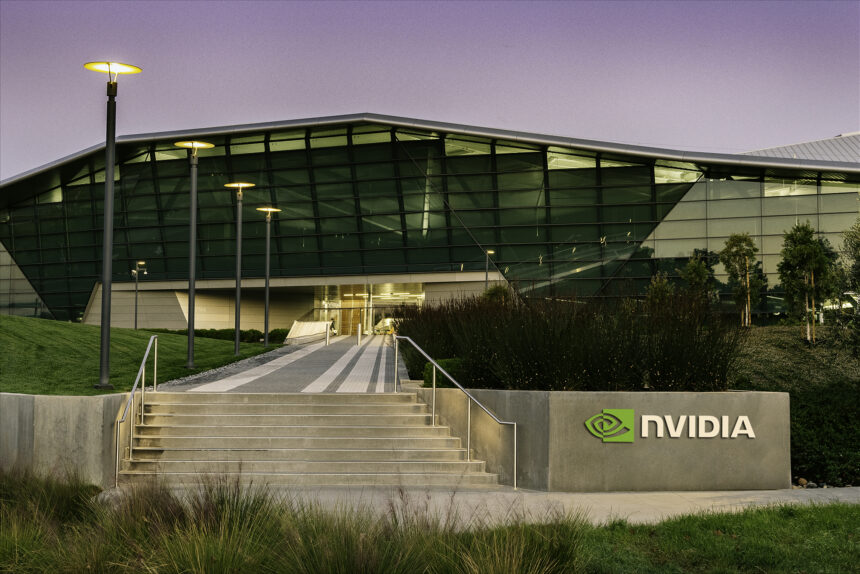
Nvidia has solidified its position at the forefront of the tech industry as a driving force behind artificial intelligence (AI), boasting a staggering market capitalization of $4.9 trillion, making it the highest-valued stock globally. This remarkable ascent is underscored by the company’s leadership in the graphics processing unit (GPU) market, where it claims a substantial market share ranging from 70% to 95%, depending on various analysts’ assessments.
In recent years, Nvidia has seen its stock price surge, delivering nearly 1,500% growth over the last five years, which translates to an impressive annual return of approximately 74%. Such growth has drawn investor attention to the potential of AI, which has already begun to reshape multiple dimensions of everyday life—from shopping to education and leisure activities.
Despite the stellar performance, the investing community remains divided regarding Nvidia’s trajectory moving forward. While the company continues to innovate and roll out new products, increased competition looms on the horizon, and unforeseen market fluctuations could impact future performance.
One of Nvidia’s key offerings is its CUDA software, designed to streamline the processes for developers, enabling easy integration with Nvidia GPUs and data centers. Recently, the company shipped the DGX Spark, lauded as the world’s smallest supercomputer, to Tesla, marking a notable achievement in Nvidia’s efforts to enhance its product ecosystem.
In its most recent fiscal quarter, which concluded on July 27, Nvidia reported an extraordinary year-over-year sales increase of 56%, fueled largely by a 73% surge in data center sales. However, these figures do not account for the anticipated contributions from the Chinese market, which has been stagnant due to regulatory constraints. With the easing of these restrictions, expectations for fourth-quarter results are heightened.
As Nvidia continues to roll out its advanced architecture, the Blackwell line, it has shown quarter-over-quarter sales growth of 17%. Looking ahead, the company is preparing to launch its next-generation AI architecture, the Vera Rubin line, in 2026, which is expected to manage even larger data loads.
The question many investors now ponder is whether Nvidia can ascend to a $10 trillion market valuation by 2030. To achieve this milestone, Nvidia would need to see its stock price increase by 104% from its current valuation, which hinges on a substantial rise in total sales—from $165.2 billion to $333 billion—over the next five years. This requires a compound annual growth rate (CAGR) of at least 15%, a goal that seems plausible given the company’s historical average annual growth rate of 64% over the past five fiscal years.
Nonetheless, as the company’s growth naturally slows with its increasing size, the price-to-sales (P/S) ratio may decline as well, necessitating higher revenue growth to sustain the journey toward a $10 trillion valuation. A more conservative estimate, leveraging a ten-year average P/S ratio of 18.6, suggests that Nvidia’s trailing 12-month sales could reach approximately $538 billion, provided it achieves a CAGR of 27%, a scenario that appears feasible given the accelerating growth of AI.
While the prospect of Nvidia reaching a $10 trillion market cap within the allocated timeframe remains speculative, many analysts and investors share an optimistic outlook, albeit with the caution that market dynamics are inherently unpredictable.