Oil prices experienced a notable decline on Monday, providing a boost to stock markets amid ongoing tensions stemming from the war in Iran. The S&P 500 climbed 1.2%, marking its best day in five weeks, while the Dow Jones Industrial Average surged by 513 points, or 1.1%, within the morning hours. The Nasdaq composite also saw a rise, gaining 1.3%.
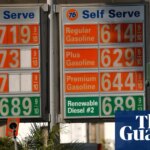
The fluctuations in market performance were heavily influenced by the price of oil. A barrel of benchmark U.S. crude dropped 5.3% to $93.57, down from earlier highs exceeding $102. Similarly, Brent crude, the international standard, fell by 2% to $101.09 after peaking at $106.50. This decrease offered a momentary relief for the economy, especially following a significant spike in oil prices, which rose from around $70 amid escalating military actions by the United States and Israel against Iran.
In a critical response to the conflict, Iran effectively ceased traffic through the strategic Strait of Hormuz, a vital passage that facilitates the movement of a substantial portion of the world’s oil supply. The disruption prompted oil producers to reduce their output as they faced logistical hurdles in transporting their crude. Market participants grew increasingly concerned that prolonged closure of the strait could lead to a severe reduction in oil availability, potentially driving inflation to levels detrimental to the global economy.
Over the weekend, President Trump urged other nations negatively impacted by the strait’s closure to take action, asserting that the United States would assist significantly. European leaders were left seeking clarity on Trump’s strategy regarding the conflict and its duration.
Historically, the U.S. stock market has shown resilience in the face of military conflicts, bouncing back relatively swiftly as long as oil prices stabilize. Professional investors remain hopeful that this trend will continue, thus maintaining U.S. stock values near all-time highs. The S&P 500 currently hovers approximately 4% below its peak.
With the situation escalating, analysts like Paul Christopher from Wells Fargo Investment Institute note that both parties in the conflict may face increasing constraints, which could help avert a prolonged confrontation.
On Wall Street, stocks of companies with considerable fuel expenditures surged in response to the declining oil prices. Norwegian Cruise Line Holdings gained 4.2%, and United Airlines increased by 3.8%, both significantly reducing their earlier losses for the year.
National Storage Affiliates saw a significant rise of 28.5% after Public Storage announced plans to acquire the company’s 69 million rentable square feet in an all-stock deal valued at $10.5 billion. Conversely, shares of Public Storage slipped by 2.5%. Additionally, Dollar Tree’s stock climbed 4.3% after reporting stronger-than-expected profits for the most recent quarter, despite a downturn in customer visits.
The tech sector also witnessed gains, with Nebius Group, a Dutch AI cloud company, experiencing a stock surge of 14% following the announcement of a five-year infrastructure contract with Meta Platforms, potentially worth up to $27 billion. Meta’s shares rose by 2.8%, contributing to the upward momentum of the S&P 500 alongside other major technology stocks.
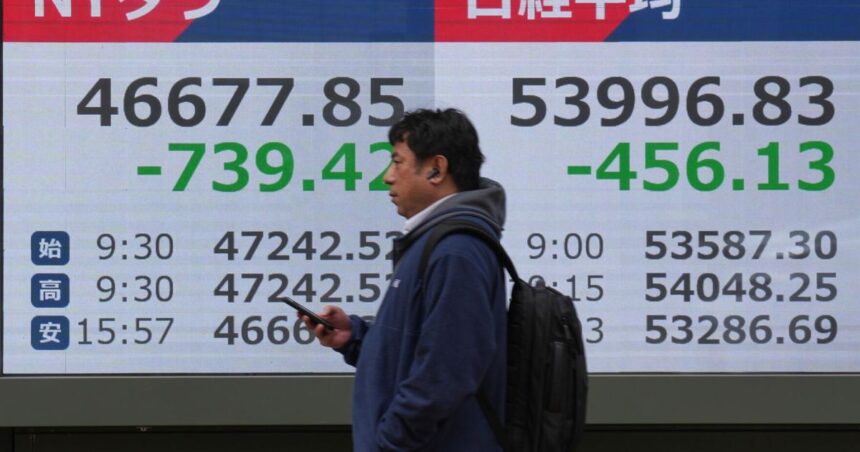
International stock markets reflected similar trends, with European indexes rising, including a 1% gain for Germany’s DAX, following a mixed performance in Asian markets. Stocks in Hong Kong jumped 1.4%, while Shanghai experienced a slight decline of 0.3%.
In the bond market, Treasury yields decreased as falling oil prices alleviated some inflation concerns. A report indicating a slowdown in manufacturing activity in New York further contributed to dipping yields, with the 10-year Treasury note falling to 4.22% from 4.28% late Friday. However, yields remained elevated compared to pre-war levels, when the 10-year Treasury yield was at 3.97%.
Traders revised their timelines regarding potential Federal Reserve interest rate cuts, an action that Trump has vocally advocated for. Nevertheless, analysts anticipate minimal likelihood of an interest rate reduction announcement following the upcoming Fed meeting on Wednesday, particularly in light of the oil price surge caused by the ongoing conflict.