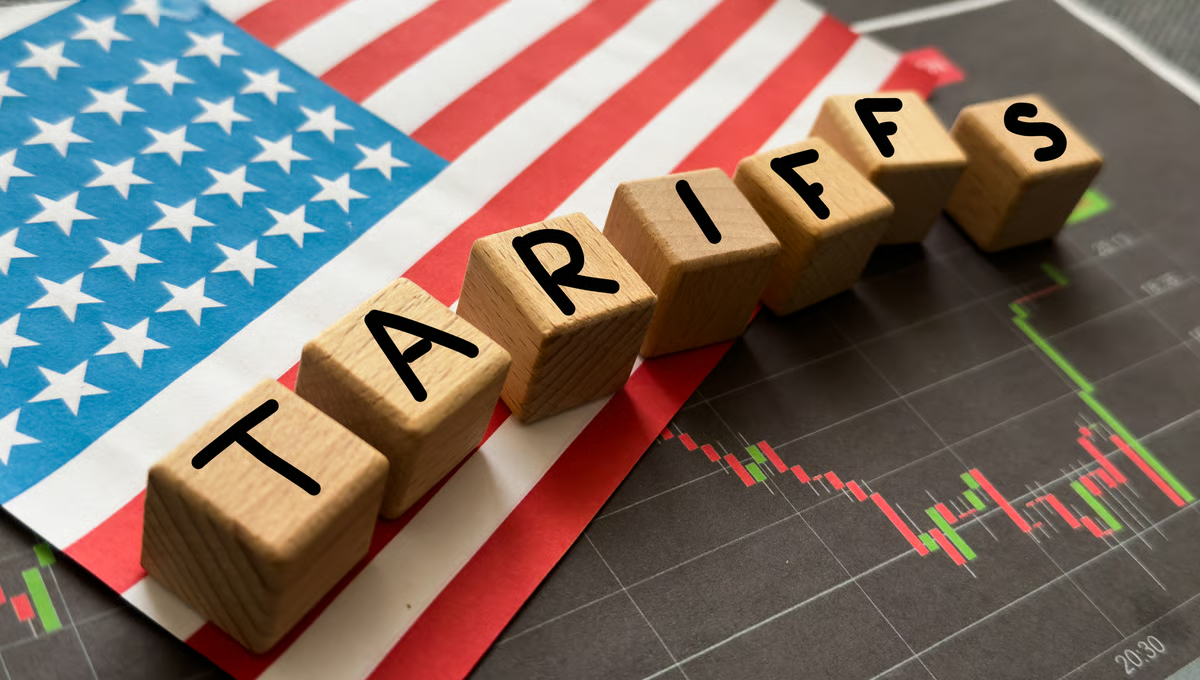
There’s a mix of optimism and concern taking shape in the financial markets regarding how President Trump’s tariff policies might impact investors in the coming years. While strict enforcement of immigration laws and rebranding the Department of Defense are unlikely to sway stock prices, tariffs pose a significant risk to corporate earnings, which directly influences stock valuations.
Over the past year, since Trump returned to office, the initial repercussions of implemented tariffs have been relatively manageable. Despite a sharp decline in the S&P 500 following the president’s announcement of a “Liberation Day” tariff in April, the market rebounded impressively, finishing 2025 with a 16% increase. Investors seemed to absorb the uncertainties primarily due to a series of tariff postponements and adjustments. Notably, Trump eased tariffs on select food imports to reduce rising grocery prices, leading the market to believe he might not follow through with excessively high tariffs, coining the term “TACO” on Wall Street—an acronym suggesting the president often backs down.
Moreover, many businesses took preemptive measures by ramping up their imported product inventories shortly before the tariffs took effect. This strategy provided a temporary cushion, as U.S. GDP dipped into negative territory in the first quarter of 2025. Importers also absorbed many of the heightened costs rather than passing these increases onto consumers, which helped mitigate overall inflation. While this approach has placed some strain on profit margins, it hasn’t yet led to significant declines in stock values.
Looking ahead to 2026, however, the outlook is less rosy. The support from inventory stockpiling that buffered consumer price increases during 2025 is likely to wane, leading to higher prices being passed down to customers. BlackRock anticipates this shift, predicting that if companies begin transferring these costs to consumers, inflation could rise accordingly. Such an increase could complicate the Federal Reserve’s potential interest rate cuts, presenting a dual challenge for the stock market.
Morningstar aligns with this sentiment, forecasting an uptick in inflation due to tariffs in the coming year. The specter of renewed tariffs, particularly if related to Trump’s ambitions concerning Greenland, also looms large. Although the president seemed to retreat from aggressive stances recently, the possibility of renewed trade actions could rattle investor confidence. Bank of America’s economist labeled the potential for this scenario as “TATA” (Trump Always Tries Again), suggesting that any renewed attempts at leveraging trade policy could precipitate a negative market response.
Despite these concerns, the prospect of a stock market crash isn’t an imminent certainty. There remains the possibility that Trump could choose to ease tensions further or avoid new tariff threats altogether. Additionally, favorable conditions such as the ongoing boom in generative AI technologies could help balance the negative effects of increasing tariffs on consumer prices. While tariffs may create volatility and uncertainty—factors that investors typically dislike: they are not likely to independently trigger a market crash.