In the wake of a significant military operation led by the U.S. and Israel against Iran, culminating in the death of Supreme Leader Ayatollah Ali Khamenei, the global oil market has reacted sharply. Over the weekend, Brent crude oil prices skyrocketed by 8%, reaching approximately $78 a barrel. This surge reflects widespread concerns regarding the stability of Middle Eastern energy supplies.
Daan Struyven, the head of oil research at Goldman Sachs, provided insights into the market’s current dynamics during a recent episode of the Goldman Sachs Exchanges podcast. He indicated that despite the price spike, the market seems to be pricing in a risk premium of about $13 per barrel, correlating with the anticipated impact of a complete closure of the Strait of Hormuz for roughly four weeks. Goldman Sachs judges that, without ongoing disruptions, the fair value for Brent crude should be around $65 per barrel.
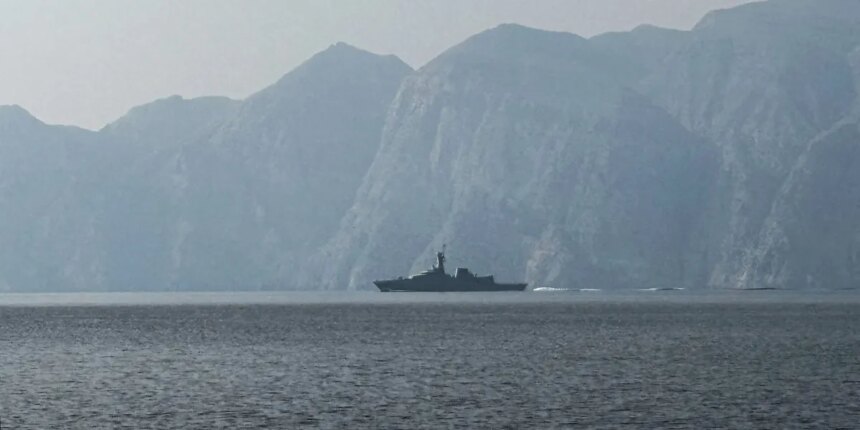
The Strait of Hormuz is a critical maritime corridor, responsible for about one-fifth of the global oil supply. Currently, the strait has not been entirely shut down; rather, fears of a potential closure have driven exporters and shippers into a “wait-and-see” mode, particularly following incidents involving damage to three vessels and rising insurance rates.
The market’s four-week disruption estimate is especially crucial for the global economy, as Struyven explained that the impact on oil prices behaves as a “convex function” over time. A brief conflict lasting only days or a week would result in comparatively minor price fluctuations, as oil could be stored on land, allowing supplies to remain intact. However, if the situation extends beyond this four-week threshold, the consequences could be severe. Should regional storage capacity be depleted and production forced to halt, the market would have to adjust through “demand destruction.” Struyven cautioned that to instigate significant demand destruction, oil prices could potentially reach triple digits, exacerbating inflation and affecting disposable incomes.
These developments come at a time when economists are gauging the impact of President Donald Trump’s Operation Epic Fury on the U.S. economy. Notably, Kent Smetters, director of the Penn Wharton budget model, projected possible economic damages from the conflict could hit as high as $210 billion. He also noted a crucial aspect often overlooked in cost assessments; the potential costs related to a nuclear-armed Iran might far surpass current military expenditures.
Adding to the financial stakes is the issue of “trapped” spare capacity. Normally, markets turn to spare production from Saudi Arabia, the UAE, and Kuwait to cushion against price spikes. However, Struyven emphasized that these reserves are contingent on being able to traverse the Strait of Hormuz, and as long as the strait remains vulnerable, this capacity cannot be utilized. The U.S. Strategic Petroleum Reserve (SPR), while a potential buffer in prolonged disruptions, is at about 415 million barrels—significantly lower than its levels before the 2022 energy crisis.
As geopolitical tensions continue to unfold, the likelihood of the market’s four-week expectation holding will largely hinge on evolving political conditions. Struyven highlighted that broader objectives, such as U.S. calls for “regime change,” may suggest a drawn-out conflict, while a shift toward reformist leadership in Iran could pave the way for a quicker resolution. For now, market participants are bracing for a month of turbulence, with hopes for a return to stability before prices escalate into the triple-digit range.