Polestar, the electric vehicle manufacturer majority-owned by China’s Geely Holding, continues to navigate turbulent waters as it grapples with financial setbacks and competitive pressures in the automotive market. The company recently announced plans for a reverse stock split in a bid to maintain its listing on the Nasdaq. This move comes amid a third-quarter report revealing a widening net loss of $365 million, compared to $323 million a year earlier.
In premarket trading, Polestar’s U.S.-listed shares saw a decline of approximately 4%, following the announcement. The company’s stock has faced challenges, hovering below $1, which has raised concerns about a potential delisting from Nasdaq due to failure to meet minimum bid price requirements. A reverse stock split is designed to consolidate share value without altering the overall value of investor holdings.
CEO Michael Lohscheller addressed the ongoing difficulties, stating, “As market conditions remain challenging, we continue to take steps to make our organization and operations more efficient.” Notably, Lohscheller has attempted similar strategies in the past during his tenure at the now-defunct EV truck manufacturer Nikola.
Despite experiencing a 36% increase in revenue for the quarter, Polestar has been adversely affected by U.S. tariffs, delays in product launches, and growing competition within the EV sector. Additionally, the company faces increased costs related to residual value guarantees associated with EV leases in North America, wherein they are obligated to compensate for shortfalls in resale values, a risk that has grown as the market for used EVs deteriorates.
To counteract losses, Polestar has implemented various strategies, including leadership changes and a shift towards a dealer-focused sales model. The company is also enhancing its focus on the European market to mitigate weak demand in the U.S., where consumer preferences are leaning more towards hybrids and traditional gasoline vehicles.
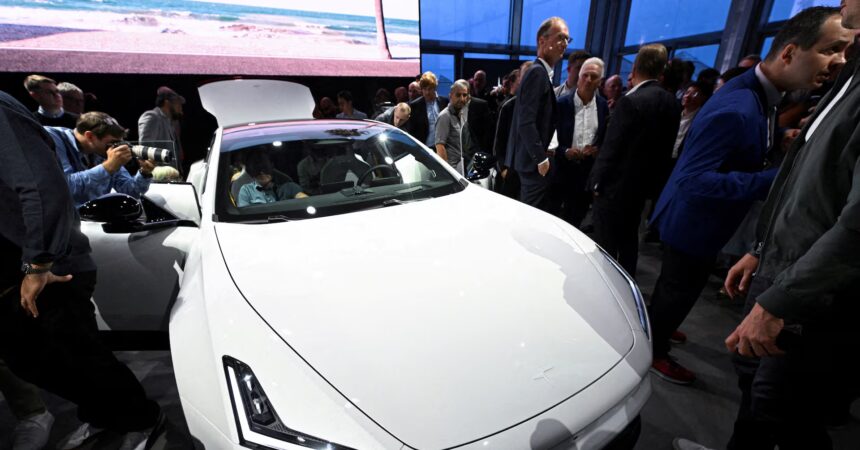
Notably, during the unveiling of the Polestar 5 GT at the IAA auto show in Munich, the company decided to forgo launches in the U.S. and China, which are considered among the most lucrative markets for EVs. Since its debut in June 2022, following a merger with a special purpose acquisition company, Polestar’s share price has plummeted from $13, highlighting the mounting pressure on the firm to stabilize its operations and financial standing.
Moreover, the company has faced challenges in meeting its debt covenants, forcing negotiations with lenders to amend terms and maintain compliance. As Polestar continues to adjust its strategies amid a shifting landscape, investors remain anxious about its future viability in an increasingly competitive market.