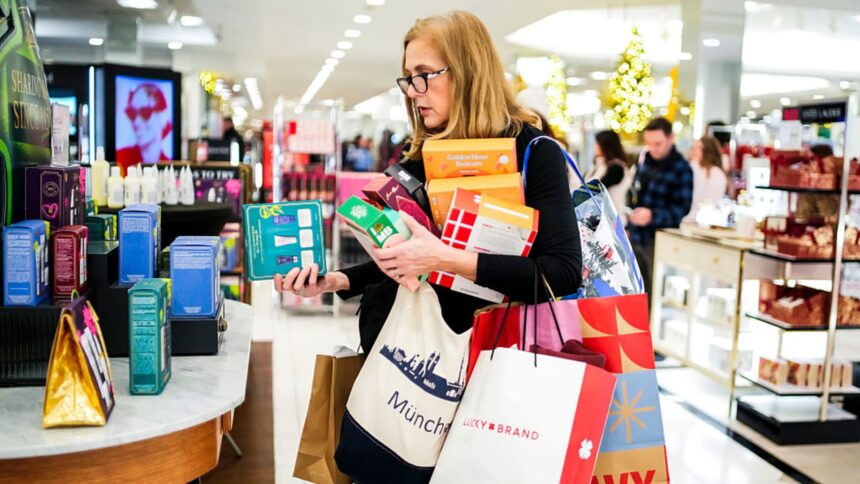
During the five-day shopping frenzy from Thanksgiving Day through Cyber Monday, an astonishing 202.9 million U.S. consumers hit the stores and online platforms, driven by a desire for deep discounts according to a recent survey by the National Retail Federation (NRF) and Prosper Insights & Analytics. This figure exceeded the NRF’s forecast of 186.9 million shoppers and marked a significant increase compared to last year’s total of 197 million. Notably, it represents the largest turnout since the NRF began tracking this period in 2017, surpassing the previous high of 200.4 million in 2023.
NRF CEO Matt Shay characterized this shopping period as “the psychological kickoff of the holidays,” emphasizing that the number of participants signifies a robust start to the season. He acknowledged that holiday shopping is often a vital aspect of family budgets. Despite economic worries and corporate layoffs affecting consumer sentiment, retail sales have demonstrated resilience. Retailers are keenly observing spending trends amid these mixed signals from the economy.
The holiday season has brought about an anticipated decline in seasonal hiring, with NRF projecting holiday positions to range between 265,000 and 365,000—marking the lowest level of temporary hires in over 15 years. Yet, the NRF expects consumers to maintain their spending habits on gifts, decorations, and other holiday-related items. The organization predicts that total holiday spending between November 1 and December 31 will reach between $1.1 trillion and $1.2 trillion, a first-time occurrence over the $1 trillion mark. This projection indicates a modest growth of 3.7% to 4.2% compared to last year’s holiday season.
Despite the slight decrease from the previous year’s growth rate of 4.3%, Shay expressed confidence in meeting these projections based on the spirited turnout this past weekend. By the end of Cyber Monday, shoppers indicated they had completed only about 47% of their holiday shopping, a figure consistent with previous years.
Phil Rist, executive vice president at Prosper Insights & Analytics, highlighted that consumers were spurred by compelling sales and promotions, including free shipping and time-sensitive offers. The survey, which included nearly 3,100 adults, was conducted from November 26 to November 30.
Mark Mathews, NRF’s chief economist, noted that while families may be financially stretched, they often choose to cut back on other expenses in favor of holiday shopping. As a result, shoppers are likely to fill their shopping baskets with not only holiday gifts but also everyday items to take advantage of appealing deals.
The survey revealed that clothing and accessories were the top-selling items, with 51% of consumers purchasing items in this category. Toys followed closely at 32%, while books and other media accounted for 28%. Gift cards were bought by 26% of respondents.
In-store shopping also saw a resurgence, with 129.5 million consumers visiting physical retail locations during the five days, a 3% year-over-year increase. However, online shopping saw an even larger growth, as 134.9 million people made purchases via retailer websites and apps—a 9% jump from the previous year.
On Cyber Monday alone, U.S. consumers spent a staggering $14.25 billion online, marking a 7.1% increase over last year, as indicated by Adobe Analytics. The overall online spending during the five-day shopping period reached $44.2 billion, reflecting a 7.7% year-over-year increase. A considerable portion of this online spending originated from Black Friday, with a total of $11.8 billion spent—a 9.1% rise compared to the previous year, as shoppers eagerly sought early deals.