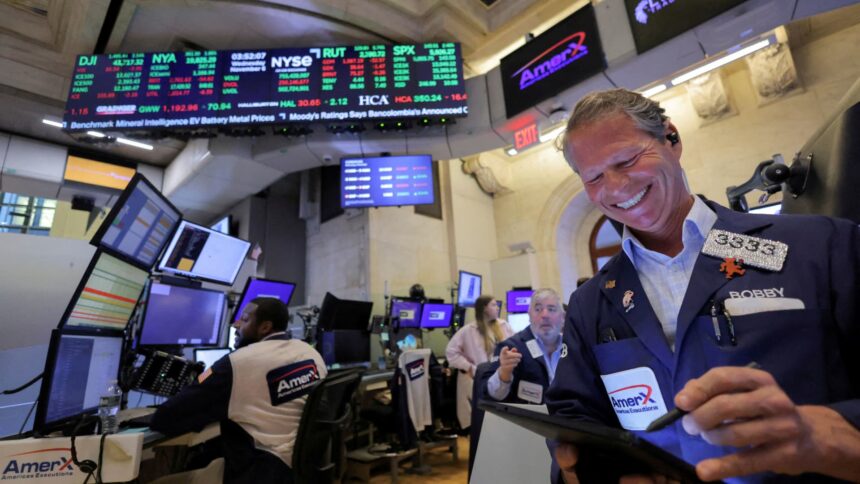
In a remarkable week for the financial markets, stocks surged to new heights, largely fueled by strong first-quarter earnings and a notable increase in oil prices due to ongoing geopolitical tensions. The S&P 500 and Nasdaq Composite each posted gains of 0.9% and 1.1% respectively, achieving record closing levels on three occasions during the week: Monday, Thursday, and Friday. This performance highlights the ongoing upward momentum for both indices, marking April as the most successful month for them since 2020, culminating in five consecutive weeks of gains.
While both indices thrived, the blue-chip Dow Jones Industrial Average rose by 0.55% throughout the week, though all of that gain was realized on Thursday, leaving it in the red for the other days. Looking ahead, analysts remain uncertain about whether this bullish trend in stocks can be sustained, as the upcoming week presents a broader range of companies reporting earnings, increasing the potential for surprises—both positive and negative.
Oil prices saw a significant spike amid escalating concerns related to the Middle East, particularly regarding the strategic Strait of Hormuz. In the initial weeks of the conflict, oil prices and stock markets appeared to move in opposite directions, but the latest developments suggest a shift. For instance, market activity on Monday reflected a jolt in oil prices after President Trump’s cessation of ceasefire talks with Iran, yet both the S&P 500 and Nasdaq managed to achieve record highs on the same day. Thursday’s trading was even more indicative of resilience; Brent crude hit a four-year high following reports of potential military actions against Iran, yet the major equity indices continued to rise.
Corporate earnings took center stage mid-week, with major tech players like Meta Platforms, Microsoft, Alphabet, and Amazon all releasing their financial results. The reactions were varied, demonstrating the complexities of market sentiment. While each company exceeded earnings expectations, their stocks did not uniformly reflect this success. Microsoft faced scrutiny, with shares declining nearly 4% after its earnings report sparked doubts about the durability of its seat-based licensing model. Despite this, Microsoft’s projections for Azure growth provided a silver lining, allowing the stock to claw back some losses later in the week.
In contrast, Amazon’s robust performance manifested in its shares, which edged forward slightly but masked impressive results, including its highest operating margins and rapid growth in Amazon Web Services. Consequently, its price target was raised by analysts. Meta, however, saw a notable drop of over 8% due to increasing capital expenditure forecasts, which investors interpreted as a worrying sign in a domain laden with heavy investments in generative AI. Conversely, Alphabet’s shares surged nearly 10% following strong quarterly results, proving the potential benefits of significant investment in AI technologies.
Thursday night brought a strong set of results from Apple, contributing to overall market optimism with shares rising over 3%, positioning it just below its all-time high.
The week also provided insight into the broader economic landscape, with the Federal Reserve’s decision to maintain interest rates being widely anticipated. Fed Chair Jerome Powell offered reassuring commentary, highlighting solid economic growth and durable consumer spending. Earnings reports from financial giants Visa and Mastercard echoed this sentiment, with both companies reporting robust numbers that reflected consumer resilience. Job market figures also illustrated stability, as initial unemployment claims fell to the lowest levels in over five decades.
As the financial markets look forward to another week of earnings, the blend of robust corporate performances and economic indicators paints a complex but hopeful picture for investors, amid global uncertainties.