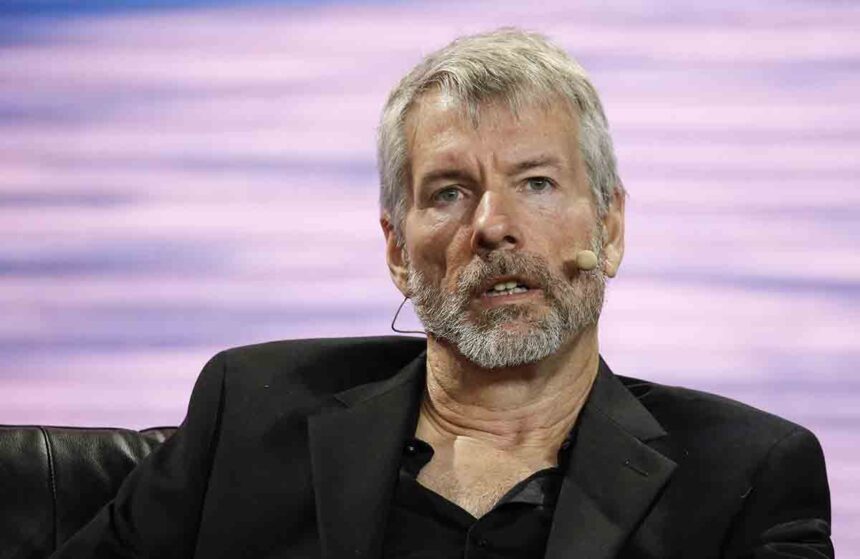
In a recent CNBC interview, Ripple CEO Brad Garlinghouse voiced strong criticisms of Michael Saylor’s company’s strategy of leveraging debt to acquire Bitcoin, arguing that it has negatively affected the broader cryptocurrency market. Garlinghouse highlighted the Variable Rate Series A Perpetual Stretch Preferred Stock (STRC) employed by Saylor’s firm, which is currently trading about 25% below its $100 par value. He described this significant discount as a “damning indictment” of Saylor’s approach, claiming it reflects a misguided focus that has harmed the market at large.
Garlinghouse distinguished his views on Saylor’s financial strategies from his perception of Bitcoin itself. He emphasized that while he supports Bitcoin as a digital asset, “financial engineering does not drive long-term value.” He stressed that the true worth of digital assets would hinge on their utility rather than short-term financial maneuvers.
When pressed for alternative strategies, Garlinghouse asserted that continuously borrowing and leveraging to acquire more Bitcoin lacks sustainability. While acknowledging that Saylor might frame his tactics differently, he noted that the excitement generated during price surges now compounds the negative impacts as the cryptocurrency market experiences its cyclical downturns.
Despite his critique of Saylor’s methods, Garlinghouse expressed bullish sentiment toward Bitcoin, invoking Warren Buffett’s well-known advice to be “fearful when others are greedy and greedy when others are fearful.” He advised that the current climate presents an opportunity to accumulate Bitcoin, referring to it as “digital gold” and highlighting the logistical advantages it has over physical gold. He pointed out the immense difficulties associated with transferring large sums of gold compared to the speed and efficiency of Bitcoin transactions.
On the topic of Ripple’s operations, Garlinghouse shared that the company processed approximately $16 trillion in payments last year, primarily through acquisitions. He noted that very little of this volume was routed through digital assets, framing this situation not as a weakness but as a significant opportunity to leverage blockchain technology, particularly XRP, for cross-border payments. As he spoke, XRP was trading above $1, reflecting a more than 4% increase over the past day, although overall retail sentiment around the token remained bearish according to Stocktwits data.