Ripple has recently announced a significant $750 million share buyback, propelling its valuation to an impressive $50 billion, reflecting a 25% increase from its previous valuation of $40 billion just a few months ago. This aggressive growth strategy includes the deployment of nearly $3 billion in capital this year to enhance its operational reach and revamp its business structure.
Among the key acquisitions are the purchase of Hidden Road, a prime brokerage, for $1.25 billion, GTreasury, a treasury management platform, for $1 billion, and Rail, a stablecoin payments company, for $200 million. These investments signify Ripple’s intent to broaden its services and reinforce its market position.
Moreover, after successfully navigating several regulatory challenges, Ripple has secured partnerships with prominent financial institutions. Most notably, the company has been invited to participate in the central bank of Singapore’s pilot program focused on stablecoin-powered trade finance, which speaks to its growing influence in traditional finance.
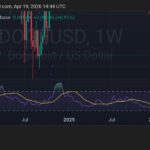
Despite these advancements, the performance of XRP, the token associated with Ripple, tells a different story. Currently priced at $1.40, XRP has seen a staggering 58% decline from its peak in July, marking an extended period without a positive monthly close since September. The apparent paradox of Ripple’s expansion juxtaposed with XRP’s declining value raises questions about the correlation between the company and its cryptocurrency.
Traditionally, it was presumed that increased demand for Ripple’s services would inherently boost the demand for XRP. However, recent developments indicate a growing disconnect. The launch of RLUSD, Ripple’s new stablecoin, has allowed payment systems that previously required XRP to utilize this alternative instead. RLUSD provides similar efficiency and cost benefits without the inherent volatility associated with XRP, thus diminishing XRP’s role as a bridge asset between currencies.
Furthermore, Ripple continues to unlock one billion XRP monthly, equating to approximately $1.4 billion at current valuations. While a large portion of these tokens is typically relocked, between 200 million to 300 million tokens still enter circulation each month, contributing to supply concerns. Data indicates that about 38 billion XRP remain in escrow until 2026. Moreover, around 60% of XRP currently in circulation is held at a cost basis close to $1.44. As XRP approaches this price point, many holders are likely to sell to recover their investments, creating further downward pressure on the token’s price.
For investors in XRP, the current trajectory suggests tough challenges ahead. While Ripple is undoubtedly establishing a formidable global financial infrastructure, this growth may not translate into favorable outcomes for XRP holders. The company’s messaging has pivoted towards integrating stablecoin payments, indicating a strategic shift away from XRP.
In summary, Ripple’s robust expansion plans contrast sharply with the performance of XRP, highlighting the complexities of the cryptocurrency market and the evolving landscape of digital finance. As Ripple continues to innovate and expand its service offerings, the fate of XRP remains uncertain, raising important considerations for current and potential investors in the token.