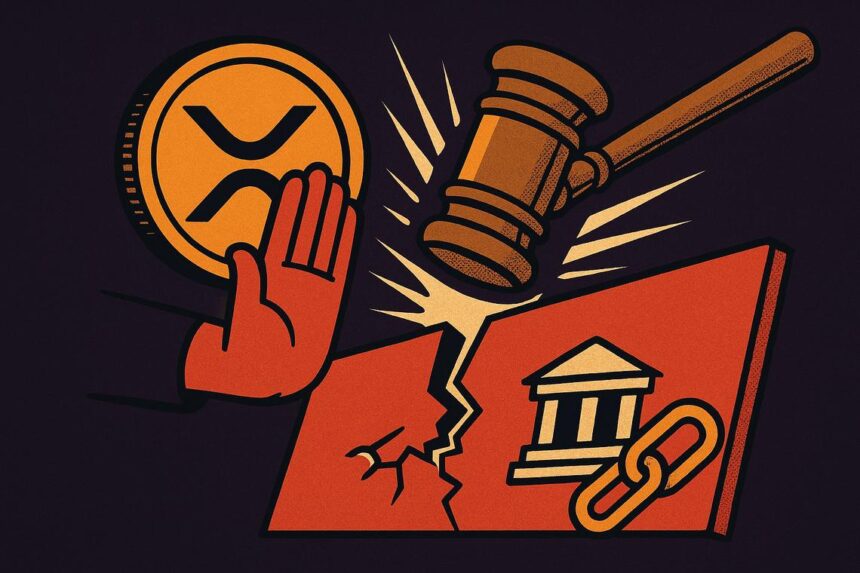
Ripple’s regulatory landscape has taken center stage in the ongoing debate over cryptocurrency policy in Washington, following statements from Ripple CEO Brad Garlinghouse. He asserted that the anti-crypto campaign has lost its momentum, attributing this shift to recent court rulings, electoral outcomes, and former President Donald Trump’s supportive stance towards cryptocurrency.
Garlinghouse’s claims signify a pivotal moment for the cryptocurrency industry, suggesting a transition from regulatory enforcement being the primary focus to a political contest over the governance of digital assets. This evolving landscape presents a crucial debate around the extent of federal oversight and the ability of companies like Ripple to operate without protracted legal uncertainties.
In his remarks, Garlinghouse emphasized that the anti-crypto sentiment has been challenged significantly, framing recent developments as a turning point after a prolonged period of pressure from regulatory authorities and skeptics in Washington. He pointed to key legal rulings, electoral results, and endorsements from Trump as significant factors contributing to this shift, stating, “by the courts, by the voters, and by Trump” have countered the anti-crypto narrative.
The ongoing legal confrontation between Ripple and the U.S. Securities and Exchange Commission (SEC), which began in 2020 over allegations related to unregistered securities offerings involving the XRP token, has emerged as a landmark case in crypto regulation. The SEC’s actions against Ripple became emblematic of the broader struggle over how U.S. securities law applies to digital assets.
A significant ruling earlier this year by Judge Analisa Torres concluded that XRP sales in secondary markets do not constitute securities transactions, which represented a substantial victory for Ripple and the wider crypto industry. However, the ruling was not absolute, as it also found that specific institutional XRP sales did violate securities laws. This nuanced outcome has far-reaching implications for how the industry perceives Ripple XRP regulation and highlights the complexities surrounding the regulatory treatment of digital assets based on the context of their sales.
Following the Torres decision, the different treatments of XRP in various markets continue to impact investor sentiment, legislative discussions, and company strategies. The ruling underscored the ambiguities in U.S. crypto law, particularly for firms engaged in payments and institutional products.
Looking at the broader political environment, Trump’s previous administration has been credited with fostering a more favorable regulatory climate for cryptocurrencies. His support for legislation such as the CLARITY Act, aimed at delineating federal jurisdiction over digital assets, signals potential future clarity in a sector that has often operated in a gray area, marked by regulatory ambiguity.
Conversely, prominent figures such as Senator Elizabeth Warren are advocating for increased regulatory scrutiny on cryptocurrencies, arguing that stringent rules are necessary to combat issues like money laundering and illicit financial activities. Warren has sought information on various crypto-related trust charters, including one associated with Ripple, and has endorsed measures to bolster compliance within the crypto ecosystem.
For Ripple, the regulatory discourse is not merely an ancillary concern but fundamental to the company’s operational viability. It is intrinsically linked to XRP’s position and the dynamics of cross-border payment systems, directly impacting how Ripple navigates its business model in line with regulatory expectations.
The potential establishment of a coherent regulatory framework through congressional action could lead to clearer delineations of SEC and Commodity Futures Trading Commission oversight, enabling companies like Ripple to proceed with greater confidence in their expansion of regulated payment and blockchain services. Clear rules could reshape the market by simplifying how tokens are categorized and governed under federal law.
Despite the more favorable mood in Washington, significant legal uncertainties remain. The classification and integration of crypto assets within the existing financial system continue to present challenges. Ripple finds itself at a critical juncture, having played a defining role in shaping the narrative of crypto regulation. The evolution in Washington could ultimately determine whether the industry can transition into a more stable and structured legislative environment, setting standards not only for XRP but for a wider ecosystem of digital assets and their associated services.