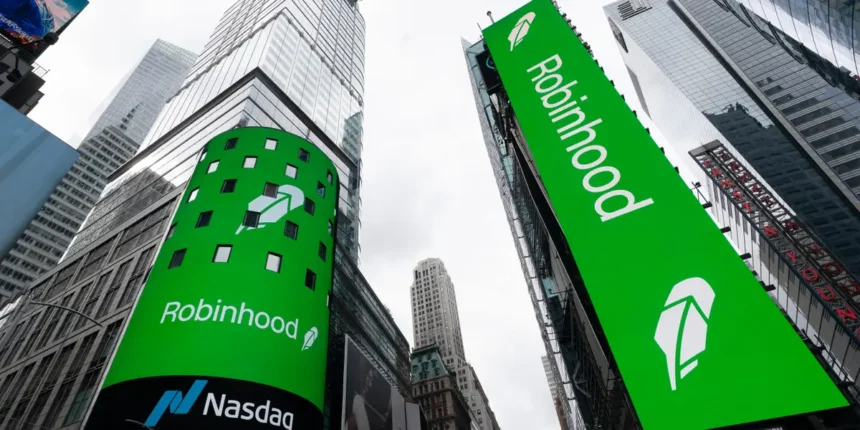
Robinhood’s stock surged by 9% on Wednesday, shaking off earlier volatility that had marked its performance throughout November. This latest uptick brings the year-to-date growth of the stock to an impressive 235%.
The notable rise in stock value follows an announcement from Robinhood on Tuesday regarding a strategic acquisition. The company revealed it will partner with Susquehanna International Group to acquire LedgerX, a regulated cryptocurrency exchange that was previously part of the now-defunct FTX empire. Following the collapse of FTX, LedgerX has been under the ownership of Miami International Holdings, which recently divested a 90% stake in the platform to the involved firms.
Robinhood’s Vice President and General Manager of Futures and International, JB Mackenzie, expressed enthusiasm about the acquisition, citing strong customer demand for prediction markets as a driving force. The investment aims to build on the momentum Robinhood has already gained in this emerging sector.
Prior to this acquisition, Robinhood’s engagement with prediction markets was primarily facilitated through its partnership with Kalshi, a platform known for popularizing event contracts across various sectors, from sports to political events. Despite its relatively limited offerings in betting contracts, the impact has been substantial. Analysts from Cantor Fitzgerald reported on Wednesday that prediction markets have now become Robinhood’s fastest-growing product line in terms of revenue, with over 9 billion contracts traded by more than 1 million customers within just a year of launch.
This acquisition positions Robinhood more favorably to tap into the increasingly lucrative market of prediction markets. Cantor analyst Brett Knoblauch emphasized the strategic advantages of acquiring a Designated Contract Market (DCM) and a Derivatives Clearing Organization (DCO) for Robinhood. He pointed out that while the primary motivation might be geared towards enhancing prediction markets, the DCM license would enable Robinhood to offer futures and options on futures. Meanwhile, the DCO would facilitate the clearing of trades involving futures, options on futures, and swaps, in addition to allowing Robinhood to provide platforms for trading standardized interest-rate swaps and credit derivatives.
As the landscape of trading continues to evolve, Robinhood’s recent maneuvers reflect a concerted effort to not only stabilize its position but also to expand its offerings in response to growing market demands.