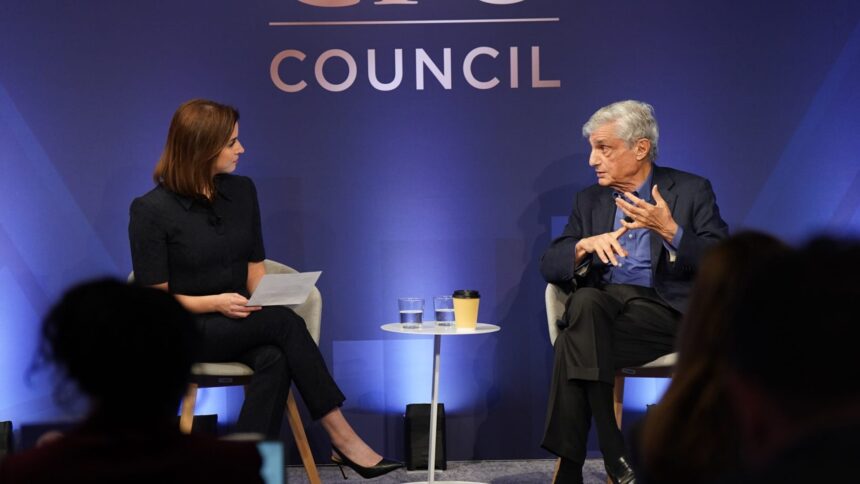
Recent discussions in the financial markets have been dominated by concerns over technology stock valuations and the emergence of a potential AI bubble. However, Robert Rubin, former U.S. Treasury Secretary and ex-Goldman Sachs co-chairman, argues that these debates overlook deeper issues of market complacency. He stresses that the focus should be on historical precedents, specifically referring to the market crash of October 1987, known as “Black Monday.”
At the CNBC CFO Council Summit in Washington D.C., Rubin elaborated on risks associated with the rising government debt and its implications for the U.S. economy. Current estimates from the Congressional Budget Office (CBO) project that the public debt will reach 99.8% of the gross domestic product (GDP) by fiscal year 2025, more than double the historical average of 51% over the past five decades. Rubin cautions that this long-term average conceals an unfavorable trend: in 2000, the ratio was only 30%. He believes the CBO’s projection, which suggests a modest rise over the next decade, is overly optimistic, and he asserts that more realistic assessments could place the debt-to-GDP ratio between 130% and 140%.
Rubin remarked that the consequences of rising debt are just beginning to manifest, affecting public investments and national security. He suggested that business confidence may also be faltering due to the debt load. He warned of “ultimate serious consequences” that are likely to lurk on the horizon, reminiscent of the conditions preceding the 1987 crash. Rubin urged his audience to remember October 19, 1987, the day the Dow Jones Industrial Average plummeted over 22% without any specific trigger, attributing the collapse to a disconnect between market valuations and reality.
A more immediate voice warning against the potential AI bubble is short seller Michael Burry, who recently hinted that the AI stock bubble could unravel within two years. In Rubin’s view, the current economic landscape holds a “quite high probability” of necessitating actions that could result in adverse outcomes. He pointed to concerns about the government possibly attempting to “inflate its way out” of this debt crisis through monetization strategies.
Rubin expressed caution regarding the complexities of the AI industry, particularly for companies like OpenAI, which lack the revenue and profit models of established tech giants. He acknowledged that the significant investments in data centers pose identifiable risks, indicating the importance of acknowledging these complexities.
During his tenure at Goldman Sachs, Rubin emphasized the necessity of being “actively involved and fully engaged.” He advocates for a cautious approach, given the array of risks from debt to geopolitical instability. He criticized the political system’s handling of these issues, suggesting that a combination of new taxes and reduced spending will be essential to lower the current deficit-to-GDP ratio, currently around 7%.
Rubin argues that stabilizing the debt-to-GDP ratio at around 100% would create a more favorable economic environment. However, he is skeptical about the feasibility of achieving growth rates sufficient to alleviate the debt and deficit challenges, suggesting they would need to be “astronomically greater” than what is realistic.
Ultimately, Rubin’s cautious bias leads him to conclude that the risks associated with the current market situation are significant and may materialize more seriously than anticipated—whether soon or in the distant future. For a market he perceives as overly complacent, the impact of these potential consequences will be felt profoundly when they eventually come to fruition.