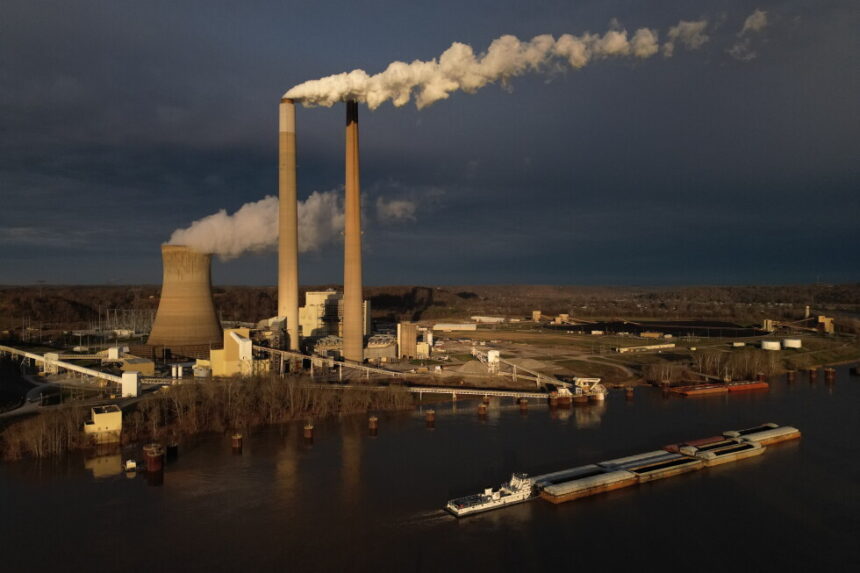
In a significant move reversing previous Biden-era regulations, the Securities and Exchange Commission (SEC) has proposed repealing a climate-disclosure rule that mandated certain public companies to report their greenhouse gas emissions as well as the risks they face from climate change. This rule has been on hold since last year due to legal challenges from business groups and Republican state attorneys general, prompting the Republican-led commission to pause its legal defense. The SEC announced its intention to rescind the rules, stating that they exceeded the agency’s statutory authority.
The rule, which was finalized in March 2024, was crafted to provide investors with crucial information regarding climate-related financial risks. SEC Chairman Paul Atkins justified the repeal by arguing that the disclosure requirements imposed substantial costs on companies and shareholders, which he deemed unjustified by the potential informational benefits for investors. He emphasized the need for regulatory measures to ensure that agency rules are only imposed when the expected benefits outweigh the burdens they place on businesses.
Environmental groups have reacted strongly against the SEC’s proposal, arguing that this decision deprives investors of essential data needed to assess the financial risks associated with climate change. Kathy Fallon, a director at the Clean Air Task Force, highlighted the SEC’s mission to protect investors and stressed that the climate rule, while imperfect, was a crucial initial step toward providing consistent information on financially material climate risks, including insights into carbon offsets.
The potential repeal of the climate-disclosure rule is part of a broader trend of environmental rollbacks that occurred during President Donald Trump’s tenure, which included actions by the Environmental Protection Agency (EPA) that dismantled key climate change initiatives. EPA Administrator Lee Zeldin has taken a particularly aggressive stance toward regulations that are seen as climate-friendly, questioning established scientific findings that have underpinned U.S. actions on greenhouse gas emissions.
The SEC’s climate rule, which received over 24,000 public comments during its formulation, was designed to align U.S. corporate disclosure standards more closely with those in the European Union and states such as California.
Opposition to the repeal has come from various quarters. Senator Ed Markey, a long-time advocate for the rule, criticized the SEC’s announcement as a capitulation to corporate interests looking to undermine regulations designed to protect investments from climate-related risks. He asserted that the SEC’s responsibility should be to safeguard Americans’ financial security from the hazards posed by climate change, not to enable companies that may pose such risks to operate unchecked.
As the SEC engages in this regulatory overhaul, climate activists and investor advocates have condemned the decision, with some warning that it reflects a broader neglect of responsibility regarding climate risks, which they argue pose significant financial threats. The SEC plans to hold a public comment period for 60 days following the proposal’s publication in the Federal Register, expected in the coming days.