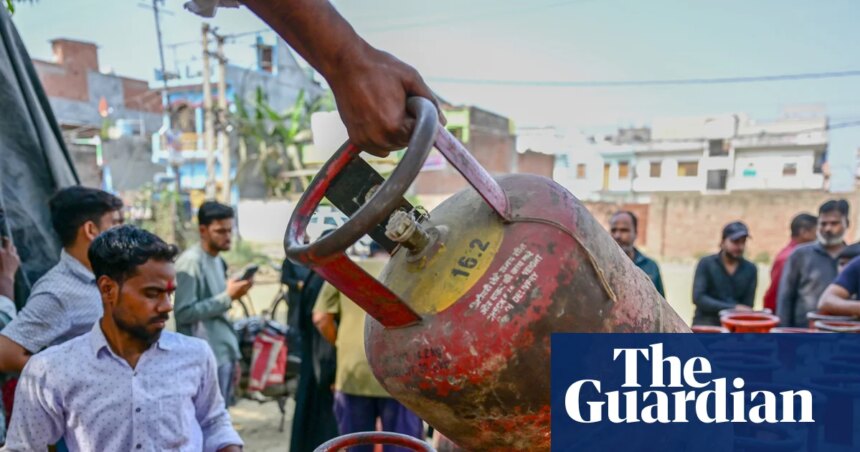
Sagar Daryani, president of the Restaurant Association of India, has voiced grave concerns regarding the challenges facing the restaurant sector, which represents around half a million establishments across the country. Due to severe constraints, many businesses have resorted to reducing operating hours, limiting menu offerings, and adopting temporary measures to remain operational. He noted that approximately one-third of restaurants are significantly impacted by the ongoing crisis, stating, “It’s a thin line between fighting today to survive tomorrow.”
In Kolkata, the famed Arsalan restaurant’s chefs continue to prepare biryani using traditional cooking pots while facing disruptions in the commercial LPG supply. This situation has forced some restaurants to remove slow-cooked dishes from their menus to conserve gas, and others have closed their doors entirely. Neha Dhingra from the Collaborative Labeling and Appliance Standards Program (CLASP) highlighted that the current crisis should highlight the urgent need for a transition to electric cooking, noting, “This moment has made us realize how critical the cooking fuel vulnerability is.”
Concurrently, India’s rupee experienced its largest decline in four years amid fears that escalating oil and gas prices would significantly increase the country’s import bill, dampening economic growth. With nearly 90% of its oil and half its gas being imported—much of it from the Gulf—India is seen as particularly vulnerable to energy shocks, especially with millions of Indian workers in the region sending over $50 billion back home annually.
In Thailand, the tourism sector is already feeling the repercussions of geopolitical conflicts. Suwarin Nantaya, who runs a trekking company in Chiang Mai, reported a drastic drop in inquiries—from around 30 to just three per day—due to ongoing turmoil. Many pre-booked customers have canceled trips, fearing they might not secure flights home. This downturn is impacting all facets of the tourism economy, leading to quieter streets in normally bustling areas.
The turbulence has also reverberated in Sri Lanka, where a QR system for fuel rationing has been reintroduced following another economic crisis. Long queues form early in the morning as locals wait desperately for fuel, with many expressing frustration over the government’s apparent lack of preparedness for this ongoing crisis. Local autorickshaw driver Nissanka Lakshman shared his struggles to make ends meet under the current rationing.
Meanwhile, security concerns are mounting in Europe in light of a series of attacks linked to escalating tensions in the Middle East. Locations in Norway, Belgium, and the Netherlands have experienced incidents targeting Jewish institutions, resulting in heightened fears within already vulnerable communities.
In South Africa, the cost of jet fuel surged by 70%, prompting airlines like Fly Safair to introduce a “dynamic fuel surcharge.” Passengers are set to bear the brunt of these increases as fuel prices consistently rise on the first of each month, leaving officials grappling with revised economic projections.
Across Japan, the impact of oil shortages is evident, not only in fuel prices but also in consumer goods such as crisps—beloved snack foods that are now facing production halts due to difficulties in securing necessary resources. As authorities implement measures to stabilize fuel supplies, the frustrations of consumers have taken to social media.
In light of these escalating crises, governments worldwide are scrambling to introduce measures to mitigate the fallout. For instance, Spain’s government announced a €5 billion package to aid citizens amid growing economic uncertainty. The broader implications of the disruptions could lead to significant impacts on food production and supply in parts of Asia, particularly Southeast Asia, where countries reliant on fertilizers face an uncertain future.
As the geopolitical landscape continues to shift, proactive steps are essential to ensure economic stability and resilience in the face of these compounded challenges. From implementing sustainable practices in energy consumption to securing supply chains across sectors, the road ahead will require collaborative efforts on both national and global scales.