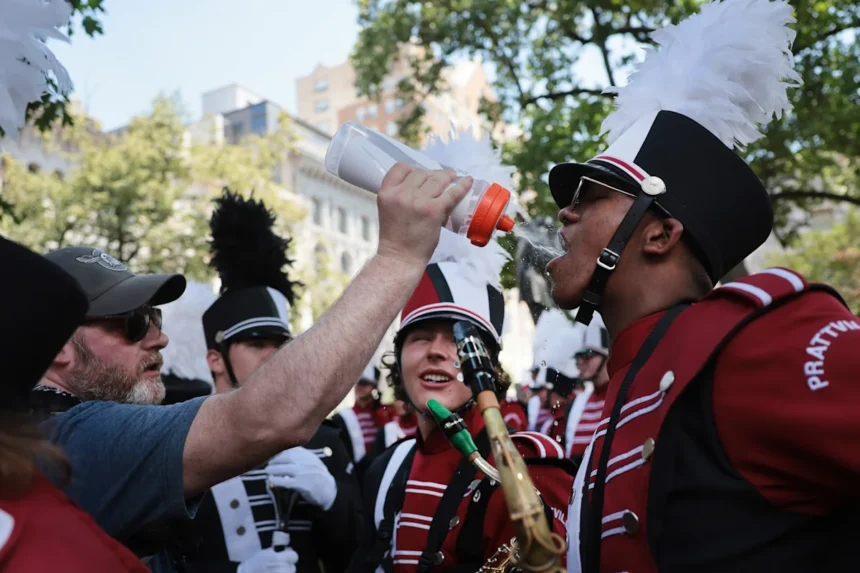
The extreme heat gripping much of the nation is exacerbating severe weather conditions as July Fourth celebrations continue across the country. Currently, over 75 million people are situated within severe storm threat areas that stretch from the Plains to the Northeast. The primary risk associated with these storms is damaging wind gusts.
The situation is particularly precarious in parts of the mid-Atlantic, including major cities like Washington, D.C., and Baltimore, which are classified under a level 3 of 5 risk. Forecasts indicate that these areas could experience powerful thunderstorms capable of producing destructive winds. Severe Thunderstorm Watches have been put in place, extending from Missouri all the way to upstate New York, covering urban centers such as Chicago, Philadelphia, and New York City.
In the Chicago area, the severe thunderstorm watch will be active until 8 p.m. ET, while parts of the mid-Atlantic, including D.C. and Baltimore, will remain under watch until 10 p.m. ET. For Philadelphia and surrounding areas, including New Jersey and New York City, the watch extends until 11 p.m. ET. The predicted storm activity might delay or even impact planned fireworks displays in New York City, as the most intense thunderstorms are expected between 8 and 10 p.m. ET. Additionally, heavy rainfall could lead to flash flooding in localized areas.
In the aftermath of scorching temperatures, which have affected over 140 million Americans, relief is finally in sight for some regions. Although a slight decrease in heat intensity was noted on Saturday, conditions remain dangerous. In Washington, D.C., the preliminary high temperature reached 102 degrees, marking this day as the hottest July Fourth in history for the city, breaking the previous record of 100 degrees set in 1919. While relief has arrived for parts of the Midwest and northern regions, many areas in the Northeast will not experience improved conditions until Sunday, with expected highs in the upper 80s for New York City and only the mid-70s for Boston.
The heat wave has also placed immense strain on power grids, resulting in widespread outages. Reports indicate that nearly 800,000 customers are currently without power across various states impacted by both severe weather and the extreme heat. This significant power disruption is affecting homes in the Midwest and Northeast, meaning that the actual number of individuals impacted is far greater.
In light of the extreme heat, various events have been canceled. Philadelphia’s Salute to Independence Semiquincentennial Parade was called off due to dangerous conditions, as was the Independence Day Parade in Washington, D.C. Organizers cited the National Weather Service’s warnings of heat index values soaring between 110°F and 115°F as a critical factor in their decision to prioritize safety.
Amtrak also announced the cancellation of several train services due to heat-related conditions, apologizing for any inconvenience this may have caused to travelers. The Great American State Fair and FIFA Fan Zone scheduled to open on the National Mall in D.C. were delayed by two hours to mitigate the risks associated with the severe heat, showcasing the ripple effects of this extreme weather across a range of events and services as the nation commemorates its Independence Day.