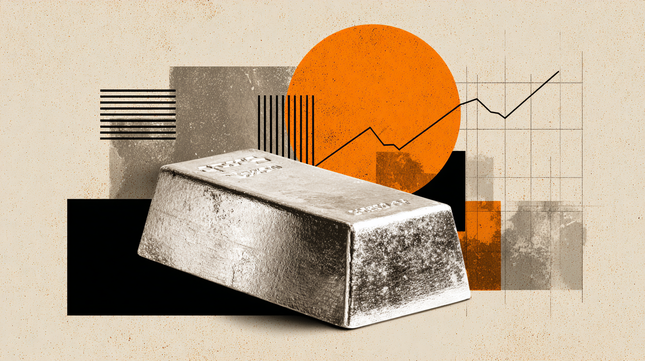
The price of Silver (XAG/USD) saw a near 2% increase on Friday; however, it remains on track to end the week with a significant loss of nearly 10%. This marks a pivotal moment as the precious metal has fallen beneath the $60.00 level for the first time since its rally commenced in early December 2025. Currently, the XAG/USD pair is trading at approximately $59.00, following a dip to a low of $55.70 earlier in the trading session.
In a broader analysis, the outlook for Silver appears bearish as it has experienced a substantial decline of nearly 22% this month alone. After peaking at a historical high of $121.66 per troy ounce in January, the appeal of Silver has waned for several reasons. The prevailing higher interest rate environment, with major central banks likely to maintain or increase rates, is exerting downward pressure on the metal’s price. Despite the recent daily gains, the overall trend for XAG remains tilted downward.
The Relative Strength Index (RSI), a key momentum indicator, indicates that sellers currently dominate the market, although it recently bounced back above the 30-mark after being in overbought territory for three days. Given this technical backdrop, many analysts suggest that the path of least resistance for Silver is downward. The first level of support for the XAG/USD is identified at the June 24 swing low of $55.63. If this level is breached, the next support would emerge at the November 13, 2025 cycle high-turned-support at $54.39, before approaching the psychological barrier of $50.00.
For the Silver bulls, a critical threshold to watch is the $60.00 mark. A decisive move above this level, coupled with a breakthrough of the 200-day Simple Moving Average (SMA) at $69.56, would suggest a resumption of bullish momentum.
Silver continues to be a highly traded precious metal, recognized for its historical value as a medium of exchange and store of wealth. While it may not hold the same popularity as Gold, investors often turn to Silver for portfolio diversification, intrinsic value, and as a hedge against inflation. Silver is accessible in various forms, including physical coins and bars, as well as through Exchange Traded Funds that track its market price.
The dynamics influencing Silver prices are multifaceted. Factors such as geopolitical instability and recession fears can drive up demand for Silver, enhancing its status as a safe-haven asset, although to a lesser extent than Gold. As a yieldless asset, Silver tends to thrive in low-interest-rate environments. Moreover, its pricing is closely tied to the strength of the US Dollar; a robust Dollar often suppresses Silver prices, while a weaker Dollar can boost them.
On the industrial front, Silver is extensively utilized in sectors like electronics and solar energy, owing to its superior electrical conductivity compared to other metals. Demand fluctuations in key economies, particularly the US, China, and India, also significantly impact price trends. In the US and China, Silver is essential for various industrial applications, while in India, consumer demand for Silver jewelry plays a crucial role in price setting.
Furthermore, trends in Silver prices often mirror those of Gold. As safe-haven assets, both metals typically move in tandem, prompting a close examination of the Gold/Silver ratio. This ratio reflects the number of ounces of Silver needed to equal the value of one ounce of Gold, and can be a useful indicator for investors assessing the relative valuation of these two precious metals. A high ratio could suggest that Silver is undervalued or that Gold is overvalued, while a low ratio might indicate the opposite.