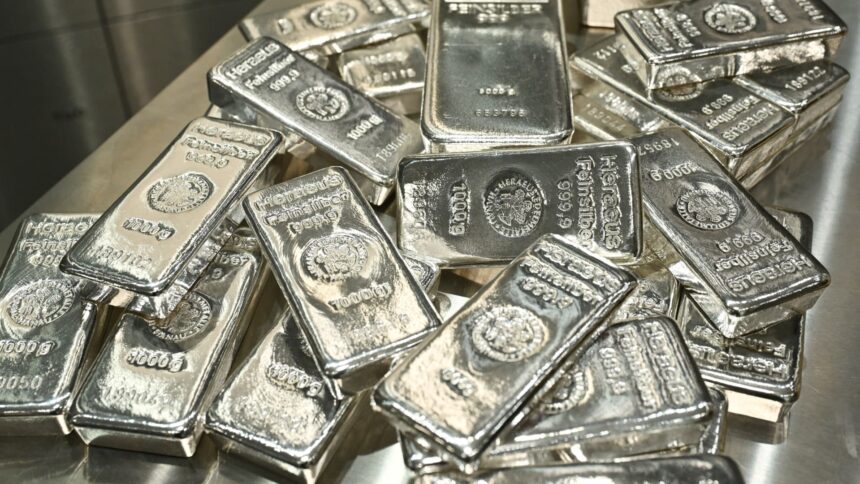
Silver, often referred to as the ‘Devil’s metal’ due to its price volatility, has surged to record highs this year, reflecting a complex interplay of supply shortages and robust demand from various sectors. Experts believe there is potential for further rises despite current high prices. This year, silver prices peaked at $54.47 per troy ounce in mid-October, showcasing a remarkable 71% increase compared to the previous year.
After initially reaching these peaks, silver prices have seen some correction but are once again on the rise. Paul Syms, head of EMEA ETF Fixed Income and commodity product management at Invesco, highlighted the extreme lengths to which some dealers were going, noting the necessity for air transport over cargo ships to meet high delivery demands. “While we’ve seen the spike up, we’ve seen the price come down a little bit. Longer term, there’s a different dynamic this time that could keep silver at reasonably high prices,” Syms stated.
Historically, October marked just the third time in 50 years that silver prices hit such extremes. The previous highs occurred in January 1980, related to the Hunt brothers’ attempt to control the market, and in 2011, during the U.S. debt ceiling crisis which saw investors flocking to silver and gold as safe havens. Syms observed that the current boom, unlike past surges, hinges on low supply coupled with escalating demand from India—particularly for industrial purposes—alongside tariff effects.
The gold-silver ratio, which quantifies how many ounces of silver can be exchanged for one ounce of gold, saw notable fluctuations this year. A lower ratio suggests that silver is undervalued, while a higher ratio indicates the opposite. In April, the ratio reached unprecedented levels as supply concerns deepened.
As the year progressed, notably in Autumn, demand for silver entered a peak phase, coinciding with the end of India’s monsoon and harvest seasons. Farmers often prefer holding silver over banks, making it a favored option for storing wealth after harvest. India, the world’s largest consumer of silver, uses approximately 4,000 metric tons annually for jewelry and utensils, and the approaching Diwali festival further fueled this demand.
Silver’s appeal in India has been particularly pronounced this year, marked by a sharp price increase. On October 17, the price of silver soared to ₹170,415 per kilogram—a staggering 85% rise since the beginning of the year. However, the majority of India’s silver supply is imported. The United Kingdom has traditionally been the largest supplier, but reports indicate that London’s silver reserves have been dwindling. The volume of silver held by the London Bullion Market Association dropped significantly in recent years, falling from 31,023 metric tons in June 2022 to 22,126 metric tons by March 2025.
The supply crunch has led to increased borrowing costs for traders wishing to hold silver, with some facing dramatic lease rates as high as 200% on an annualized basis. O’Connell, head of market analysis EMEA and Asia at Stone X, noted that a lack of visibility around silver vault stocks has compounded market stress.
The Silver Institute’s World Silver Survey revealed a troubling trend: mine production has been declining for a decade, particularly in Central and South America. The ongoing shift toward electric vehicles, artificial intelligence, and solar technology applications is driving an unprecedented demand for silver. The average electric vehicle currently contains around 25 grams of silver, with potential future innovations such as solid-state batteries requiring even more.
In light of silver’s unique properties, including superior thermal and electrical conductivity, experts foresee a sustained rise in its value. As technology continues to evolve, silver stands poised at the intersection of precious and industrial metals, promising a bright future as the world leans into a more electrified and technologically driven era.