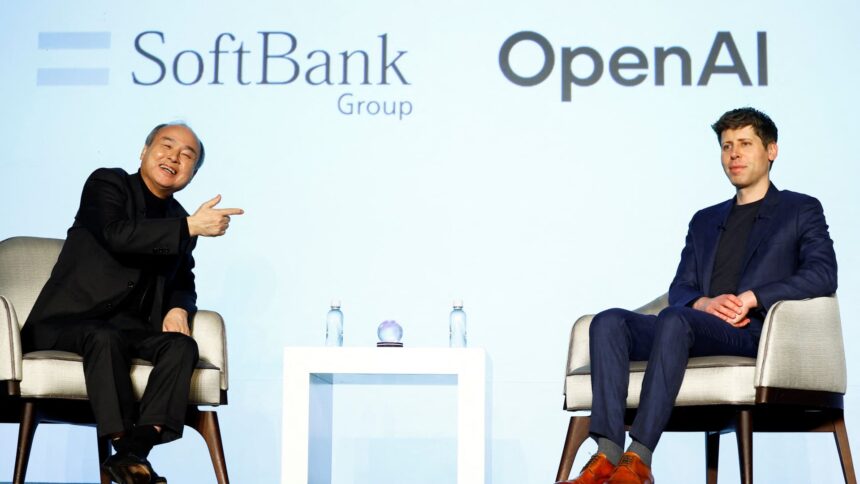
SoftBank has revealed a substantial yearly gain of $46 billion within its Vision Fund, primarily fueled by the soaring valuation of its investment in OpenAI. This significant financial performance comes amidst a backdrop of increased scrutiny regarding the company’s broader portfolio.
SoftBank’s investment in OpenAI has exceeded $30 billion, yielding approximately $45 billion in gains over the financial year that concluded in March. The Vision Fund specifically reported a gain of around $20 billion in the last quarter leading to March, with OpenAI being the primary driver of these results. However, this success contrasts sharply with losses incurred in other investments, including stakes in companies like Coupang, DiDi Global, and Klarna.
As the competition in the artificial intelligence market intensifies, SoftBank is strategically positioning itself at the forefront of the AI revolution, diversifying its investments across various AI and semiconductor firms. OpenAI serves as the cornerstone of this strategy. The company has pledged over $60 billion in future investments into OpenAI, aiming for a roughly 13% ownership stake. Recent funding rounds, co-led by SoftBank, have valued OpenAI at an impressive $852 billion, highlighting its status despite facing formidable rivals such as Google and Anthropic.
However, the heavy concentration of OpenAI within SoftBank’s portfolio has raised alarms concerning its debt levels. S&P Global Ratings recently downgraded SoftBank’s outlook from “stable” to “negative,” citing concerns over the sustainability of its asset liquidity and portfolio quality, along with its financial health due to this large investment in OpenAI. S&P indicated that SoftBank could alleviate some financial pressure by divesting from other assets, which the company has begun to undertake by reducing its stakes in firms like T-Mobile and Nvidia. These asset sales have reportedly generated about 218.1 billion Japanese yen (approximately $1.4 billion).
Despite these efforts, SoftBank recorded an investment income loss of 472.1 billion yen after adjusting for exchange rates and expenses, excluding the performance of the Vision Fund. On a financial call, the company’s CFO, Yoshimitsu Goto, emphasized the need for financial discipline, noting that SoftBank holds a cash position of 3.5 trillion yen, sufficient to cover over two years’ worth of bond redemptions.
Overall, the SoftBank group reported a net profit of 5 trillion yen for the fiscal year, with the Vision Fund and the telecommunications division serving as the primary contributors to this result. As SoftBank continues its aggressive investment strategy in AI, all eyes will be on how it manages its financial structure amid the associated risks.