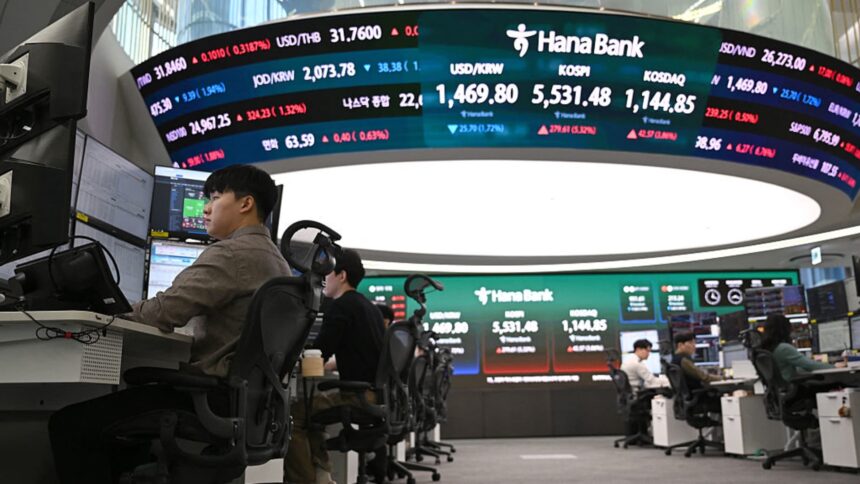
Currency dealers closely monitored exchange rates as an electronic display showcased South Korea’s benchmark stock indexes, the KOSPI and KOSDAQ, in a bustling foreign exchange dealing room at Hana Bank’s headquarters in Seoul. On March 10, 2026, stock markets in both South Korea and Japan experienced significant gains in early trading, driven by a notable decline in the US crude oil benchmark, WTI, which fell over six percent.
In a broader context, South Korea’s KOSPI index has made headlines with an impressive surge exceeding 70% since the beginning of the year, reaching record heights above 7,000. This upward trajectory has been fueled largely by the outstanding performance of Samsung, which saw its shares soar more than 15% recently. As a result, Samsung’s market capitalization surpassed the $1 trillion mark, making it only the second Asian company to achieve this status, following TSMC, which first crossed the threshold in late February.
At the same time, President Donald Trump announced a pause in “Project Freedom,” a military strategy aimed at ensuring the safe passage of commercial ships through the Strait of Hormuz. This decision came just one day after the initiative was launched, indicating a shift in strategy as progress in negotiations with Iran appeared more promising. Trump suggested that the pause would allow for a better assessment of the potential to finalize a comprehensive agreement with Iran.
Adding to the geopolitical landscape, China welcomed Iran’s Foreign Minister Abbas Araghchi for talks in Beijing, marking the first meeting since the outbreak of the ongoing U.S.-Israel conflict. This diplomatic engagement was highlighted by Chinese state media, although the specifics of the discussions remained undisclosed.
In corporate earnings news, Lufthansa and Novo Nordisk were set to lead reports in Europe, with Disney expected to draw significant attention in the U.S. market later on.
In a notable shift regarding Bitcoin investment strategies, Strategy, a treasury firm, announced a departure from its longstanding “never sell” policy. The recent earnings release revealed a $12.5 billion net loss in the first quarter, prompting the company to consider more active management of its Bitcoin holdings. CEO Phong Le outlined a potential shift towards selling Bitcoin when it would benefit the company’s overall valuation. This new approach marks a significant change from the firm’s previous strategy, illustrating the dynamic nature of cryptocurrency markets.
As global events continue to shape financial landscapes, investors remain attentive to emerging trends and shifts in market sentiment.