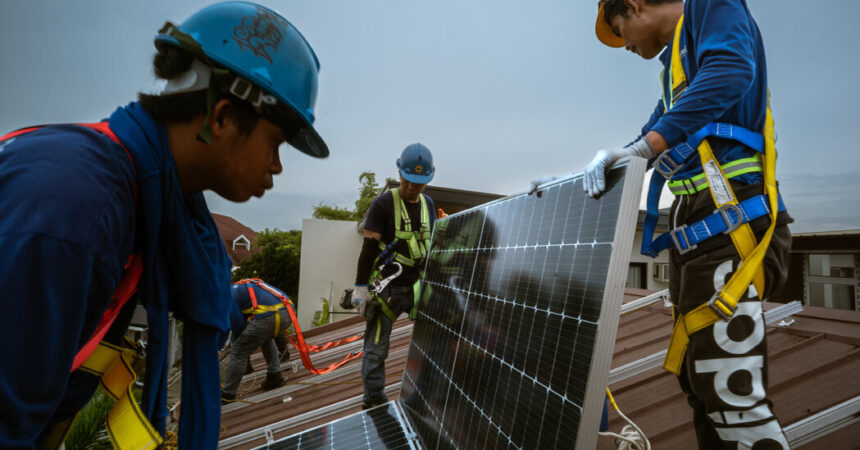
In recent weeks, a surge in solar panel installations has been witnessed across Southeast Asia, driven by escalating energy concerns following the outbreak of conflict in Iran. As oil prices soared and electricity supply became uncertain, residents in countries such as the Philippines, Malaysia, and Indonesia are opting for solar energy solutions to reduce their dependence on the grid.
Heidi Mendoza, a financial literacy instructor based in Marikina, Philippines, installed solar panels on her three-story home in March, just weeks after the onset of the war in Iran. “I got scared that we might lose electricity,” she remarked, explaining her swift decision. Similarly, in Kuala Lumpur, architect Ming Kuang Chai made a rapid move to install solar panels for cost management amid rising energy expenses, particularly because he drives an electric vehicle.
Adiana Julia from Yogyakarta, Indonesia, is planning to enhance her parents’ house with solar energy to diminish their reliance on traditional electricity sources. “It’s better if we can find ways to reduce our dependence on the grid,” she stated.
This shift is significant in a region heavily reliant on oil imports via the Strait of Hormuz, which has faced disruptions since the conflict began. While a preliminary agreement to end the hostilities has been reached, the long-term economic repercussions are expected to alter consumer behaviors. The Philippines reportedly declared a national emergency shortly after the conflict escalated, warning citizens of potential rolling blackouts as oil prices surged.
To avert the impact of these disruptions, Mendoza invested approximately 390,000 Philippine pesos (around $6,500) in solar panels, stating, “Otherwise, I wouldn’t be able to do my online work.” In response to increasing demand, Chinese manufacturers have ramped up solar panel exports to Southeast Asia, significantly boosting sales figures—5.5 gigawatts of solar capacity were sold in March 2023, more than doubling previous years’ volumes.
The rising interest in solar solutions is also benefiting local companies, such as GoSolar Philippines, which reported a fivefold increase in orders. “Households are increasingly turning to rooftop solar to offset rising electricity bills,” noted Angelo Kairos dela Cruz from the Institute for Climate and Sustainable Cities in Quezon City. This trend is also reflected in Malaysia, where businesses are adopting solar energy to manage operational costs.
In recent months, countries like Cambodia have actively encouraged solar energy adoption by removing import duties on solar panels and energy storage systems. Meanwhile, in Indonesia, although the country continues to lean heavily on coal, the government has set a goal of generating 100 gigawatts of solar energy within three years. However, challenges remain, particularly with regulations that restrict individuals to connecting solar systems to the grid only during specific times of the year.
Despite these hurdles, many consumers, like 52-year-old Aris Yanto, are taking matters into their own hands. Yanto ordered solar panels online and installed them independently, bypassing the grid entirely due to frequent power outages and voltage fluctuations in his area.
In Thailand, the government is nearing the completion of regulations that will allow households to sell surplus electricity generated from rooftop panels back to the national grid, further promoting solar energy adoption in the region.
Experts suggest that this trend will continue as Southeast Asian nations pursue solar energy as a viable solution for enhancing energy security. “Countries would still look for solar as a near-term solution for energy security since unpredictable geopolitical events, like what happened in Hormuz, might happen again in the future,” stated analyst Wan Afiq Naqiuddin. The momentum towards renewable energy is anticipated to reshape the energy landscape in Southeast Asia for years to come.