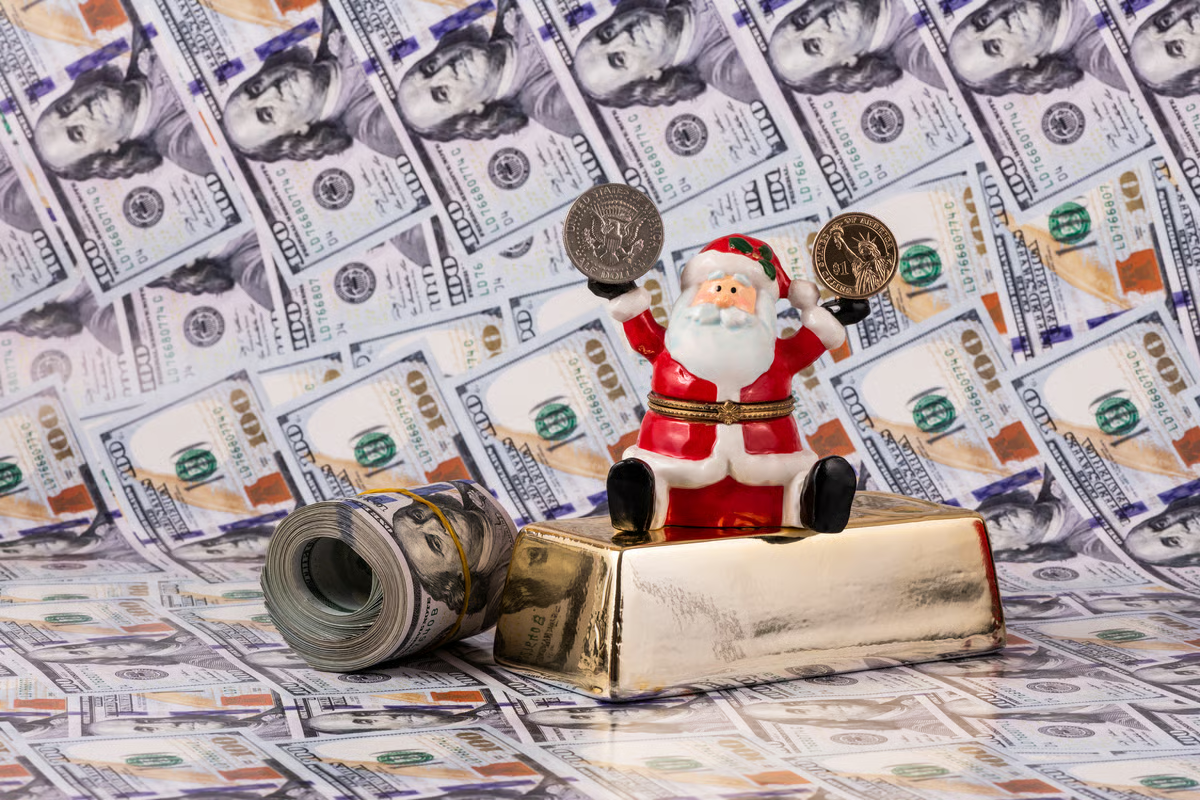
The holiday season typically brings a sense of optimism to the markets, often reflected in what is known as the “Santa Claus rally.” This rally, measured by the performance of the S&P 500 over the last five trading days of December and the first two of January, is seen as a window of opportunity for investors to realize gains. Historically, between 1950 and 2025, the S&P 500 has recorded positive returns 78% of the time during this period, with an average gain of around 1.3%.
However, this year has deviated sharply from that tradition. For the first time since 1950, the S&P 500 has experienced three consecutive years of negative returns during the Santa Claus rally window. In 2024, the index dropped by 0.9%, followed by a decline of 0.3% in 2025, and this year saw a further slight dip of 0.1%.
While the Santa Claus rally is not a definitive measure, it has often served as a barometer for the market’s performance in the upcoming year. Historically, when the S&P 500 has performed well during this time, the average full-year return has been a substantial 10.4%. Conversely, years marked by a downturn during the rally have averaged only a 6.1% increase for the entire year.
It’s worth noting that the past two years exemplified a rare inconsistency: despite the Santa Claus rally’s downturn, the S&P 500 still managed impressive full-year increases, achieving gains of 23% in 2024 and 16% in 2025. Nevertheless, the unprecedented streak of negative returns during the rally raises concerns about potential vulnerabilities in the U.S. stock market.
The current conditions lead to speculation that the index may be facing a higher risk of a significant pullback, especially since the previous two years exhibited notable double-digit returns. The uncertainty surrounding what impacts these consecutive years of decline could have on future market performance adds to the apprehension felt by investors.