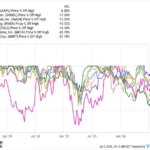
Recent developments in the financial markets highlight a significant shift, marked by an unyielding belief in the transformative potential of artificial intelligence (AI). Currently, the S&P 500 is witnessing an unprecedented concentration in the tech sector, primarily dominated by two key players: Nvidia (NVDA) and Apple (AAPL). Data shared by Charlie Bilello, chief markets strategist at Creative Planning, reveals that these two companies account for over 15% of the S&P 500—a concentration level that surpasses what was observed during the dot-com bubble, when giants like Microsoft (MSFT) and General Electric (GE) were at the forefront.
The ascendancy of Nvidia and Apple reflects a strong positive sentiment among investors, particularly regarding AI advancements. Nvidia has experienced notable enthusiasm due to its robust demand for AI chips, a critical component that is driving the tech narrative forward. Meanwhile, Apple’s optimistic outlook hinges on the appointment of incoming CEO John Ternus, who is expected to spearhead a variety of AI initiatives, further embedding the company in the evolving tech landscape.
Despite this positive momentum, the tech market recently faced a setback in mid-May, as profit-taking practices took hold, impacting even the most resilient stocks. A key driver of this shift was an unexpected increase in the Consumer Price Index (CPI) for April, which reported an annual inflation rate of 3.8%. This spike was significantly influenced by rising oil prices amid ongoing tensions in the Middle East, particularly concerning Iran. The inflation report dampened Wall Street’s hopes for imminent interest rate cuts, triggering a noticeable sell-off in government bonds and pushing the yield on 10-year Treasuries to a 12-month high of 4.61%. The shift in market sentiment has raised discussions about the possibility of impending interest rate hikes.
High-growth tech stocks often rely on the discounting of projected future earnings, making them particularly sensitive to fluctuations in yield. As yields increase, stock valuations can compress, leading institutional investors to recalibrate their portfolios ahead of critical earnings announcements from major companies. The selling pressure has particularly affected high-performing stocks like Micron (MU) and Sandisk (SNDK), showcasing the volatility inherent in this concentrated market environment.
The overarching concern is that ideally, gains in the market should be driven by a diverse range of sectors and stocks. However, the reality reflects a strong preference among investors for technology and the expansive financial opportunities that AI offers. While this concentration can lead to substantial growth, historical patterns suggest that such outsized reliance on a specific sector can also lead to turbulent corrections. The rise in Treasury yields might just be the catalyst prompting a reassessment of the tech market by a more cautious Wall Street, indicating a potential shift in investment strategies moving forward.