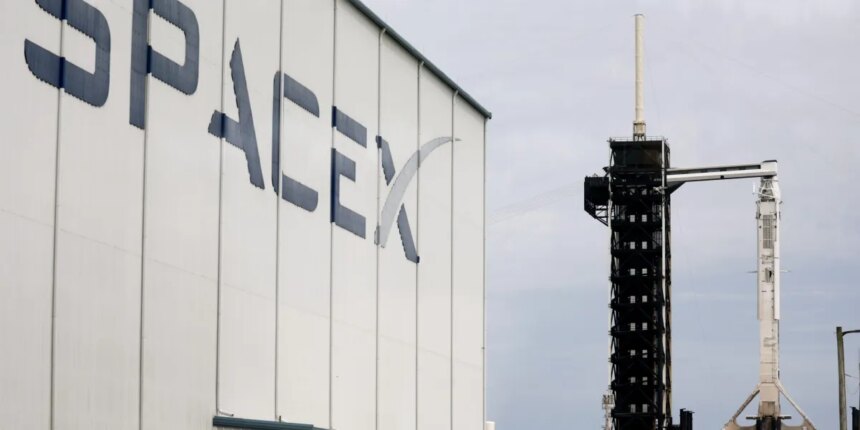
Mega-IPO candidates, including SpaceX, are bracing for a challenging path to entry into the S&P 500 Index following a recent decision by S&P Dow Jones Indices. The index committee has rejected a proposal that would have relaxed the existing requirement mandating that firms show positive net income for the past year, including the latest quarter. This announcement was made last Thursday after a month-long consultation period.
According to analysts from Evercore ISI, Elon Musk’s SpaceX is not expected to achieve annual profitability until 2027. This timeline suggests that if the profitability rule remains unchanged, SpaceX’s inclusion in the S&P 500 could be delayed until at least 2028.
Jay Ritter, a director at the IPO Initiative at the University of Florida, expressed that while these mega-IPOs will eventually join the S&P 500 unless they encounter business model failures, the timing of this inclusion remains uncertain. He pointed out that the current low trading volumes and substantial funds indexed to the S&P 500 make it prudent for these companies to wait until their stocks are more liquid before seeking inclusion.
SpaceX, officially known as Space Exploration Technologies Corp., is preparing for its debut on the trading market, scheduled for June 12. The company is targeting a valuation of $1.8 trillion, which would position it just behind only six other S&P 500 companies and exceed the value of Musk’s Tesla Inc.
Although SpaceX faces hurdles with the S&P, it is expected to enter the Nasdaq 100 soon, potentially within weeks. In contrast to the S&P, Nasdaq Inc. recently revised its rules to allow listings in as little as 15 trading days, significantly shortening the previous waiting period, while FTSE Russell has implemented a similar approach, reducing the waiting time to five trading days.
The prospects for other notable companies like Anthropic PBC and OpenAI eyeing IPOs this year could also be complicated by similar profitability requirements. Despite promising valuations above $1 trillion for each, both companies face scrutiny over their operational spending and profit projections. Anthropic is forecasting an operating profit of $559 million for the June quarter but does not plan on maintaining profitability in subsequent quarters due to increased investment in computing resources.
OpenAI is not predicted to turn a profit in the coming years, which raises questions about its entry into major indexes.
From a corporate strategy perspective, investment manager Lawrence Creatura highlighted how companies like Amazon and Uber didn’t achieve S&P 500 inclusion until years after going public, despite operating at losses during their early years. He noted that while this could delay inclusion, it ultimately doesn’t hinder long-term success.
The S&P 500 aims to reflect the US domestic market, according to Howard Silverblatt, a former senior index analyst. He emphasized that maintaining a profitability requirement is one of the most challenging aspects for the S&P to justify, citing that companies often invest heavily in research and development at the expense of immediate profits.
Research teams from Goldman Sachs and Evercore ISI anticipate that SpaceX’s capital expenditures could reach over $360 billion by 2030, a significant increase from $20 billion last year. Goldman Sachs estimates a shift to positive free cash flow of more than $72 billion by 2031, following a projected loss of $105 billion in 2029.
The potential rapid inclusion of these firms into the S&P 500 could have resulted in a combined force of passive purchasing exceeding $31 billion, according to Bloomberg Intelligence estimates. While some market experts expressed concern over the decision to maintain existing rules, others welcomed the adherence to strict guidelines.
Market strategist Michael Antonelli of Baird noted that the integrity of the S&P 500 will remain intact, asserting that the index will not waver in its established criteria, regardless of the prominence of individual firms like Elon Musk’s SpaceX.