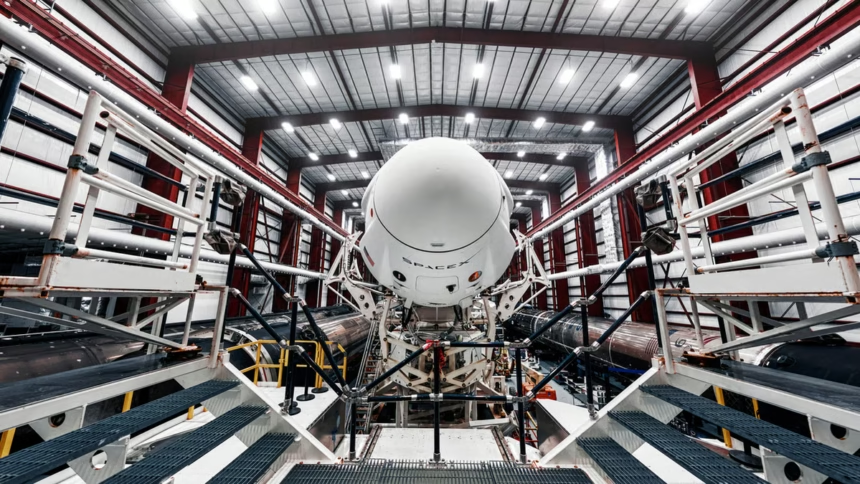
In a noteworthy session for Space Exploration Technologies, commonly known as SpaceX, the company’s stock closed down 3.6% on June 18, marking a decline of about 18% from its all-time intraday high of $225.64 per share just two days prior. Despite the recent decrease, SpaceX has seen considerable growth since its initial public offering (IPO), where shares were priced at $135, and debuted at $150.
The elements contributing to SpaceX’s volatility are rooted in both its unique business model and the structure of its IPO. The company reported a staggering net loss of $4.94 billion in 2025. Although its primary revenue driver is the Starlink network of low-Earth-orbit satellites, the potential for significant growth may stem from its artificial intelligence initiatives through a subsidiary called xAI. SpaceX envisions operating a fleet of AI compute satellites, with plans to roll out the first by 2028.
The IPO was a remarkable success, raising $75 billion through the sale of 555 million shares at $135 each. Additionally, the company secured another $10.7 billion from underwriters who opted for more shares, resulting in a float of around 5% of the total shares outstanding. This figure is expected to increase to approximately 37% by late August, but currently, the limited number of SpaceX shares available on the Nasdaq has led to heightened demand.
Differentiating between traders and long-term investors is vital during such periods of market volatility. Many investors may buy SpaceX shares with various intentions; some aim for quick gains, while others may plan to hold their investments for years, possibly even decades. This mix of motivations creates a complex market dynamic, emphasizing the importance of purchasing stocks for the right reasons rather than being swayed by fleeting price changes. A diversified portfolio is recommended for long-term wealth accumulation rather than attempting to time the market.
At a market capitalization exceeding $2 trillion, buying into SpaceX currently appears illogical, considering the company’s financial losses compared to other members of the $2 trillion club, like Nvidia, Apple, and Amazon, all of which report substantial quarterly profits. The thesis for long-term investment in SpaceX relies on the belief that its visionary projects will eventually yield returns. Nonetheless, those results may take years, if not decades, to materialize.
For traders apprehensive about SpaceX’s recent downturn, long-term investors are advised to brace for continued swings in the stock price, influenced by market sentiment and availability of shares post-insider sales. A sound strategy involves purchasing shares only if there is strong belief in the company’s future vision.
For many, it may be wiser to keep SpaceX on a watchlist rather than impulsively entering the market at a predetermined price. A more effective approach would involve tracking business developments rather than focusing solely on stock prices. SpaceX’s ambitious plans for deploying data center satellites in space could offer a significant opportunity, utilizing abundant solar power and minimizing fresh water usage for cooling.
If the company demonstrates meaningful advancements in this complex technological endeavor, a higher valuation could be justified. However, for now, the market requires additional time to assess SpaceX’s value as a public entity.