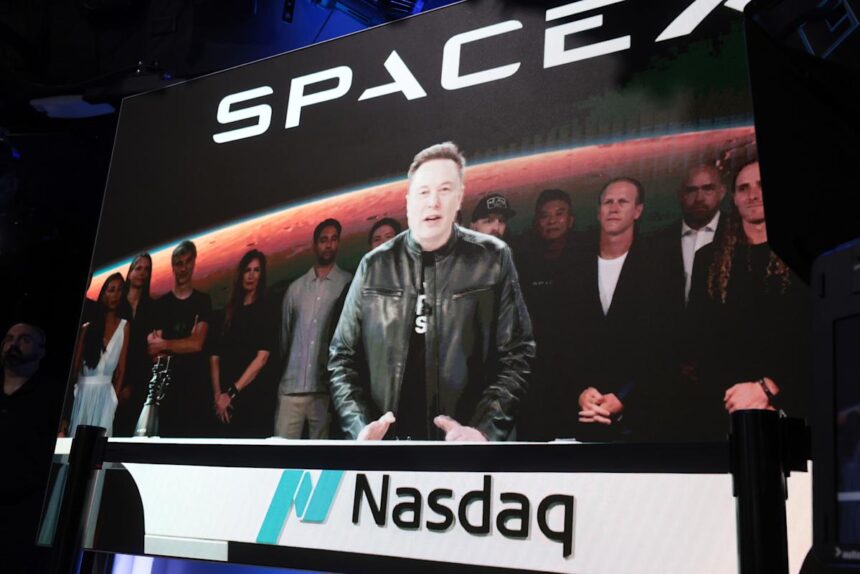
SpaceX’s recent IPO has emerged as a pivotal moment for Wall Street, signaling a robust future for the ongoing AI bull market. The excitement surrounding the IPO comes amid a backdrop of fluctuating technology stocks, which had previously incited concerns about the market’s ability to manage the influx of new share issuances. These apprehensions were compounded by a notable uptick in AI-related fundraising efforts, including significant capital raises from major corporations like Alphabet and anticipated IPOs from companies such as Anthropic and another entity denoted as OPAI.PVT.
Tom Sosnoff, founder and CEO of Lossdog, expressed optimism about the market’s resilience, stating, “When you talk about absorbing it, this market has been able to absorb virtually anything.” On a confidence scale, he rated it a perfect ten.
On the first day of trading, SpaceX’s stock surged nearly 20%, greatly fueled by retail investors. Enthusiasm for founder Elon Musk’s innovative vision played a substantial role in this spike. Fortuna Investments CEO Justus Parmar highlighted the overwhelming response, noting that the offering was “very, very oversubscribed” and his firm had only secured a fraction of the shares it had sought.
Prior to the IPO, Vanda Research observed that retail investors might be conserving their resources in anticipation of SpaceX’s debut, noting that recent retail activity had fallen to its lowest levels since March 2020. Investors were seen reallocating from established AI successes like Micron and Marvell to fund new acquisitions, reinforcing the belief that if SpaceX proves to be a viable player in the market, it could trigger further sell-offs of previous winners.
Despite the enthusiasm, analysts have urged caution regarding immediate investments in newly public stocks. Historical trends indicate that IPOs which launch successfully often experience declines once insider lock-up periods end. Examples like Facebook, Robinhood, and Coinbase illustrate the potential for better entry points in the aftermath of initial trading surges.
In its IPO, SpaceX offered about 5% of the company to the public. Roger Ibbotson, a Yale professor emeritus, compared the market’s underlying structure to an iceberg, suggesting a significant number of sellers remain hidden below the surface. Conversely, Nancy Tengler from Laffer Tengler Investments likened SpaceX to Amazon’s IPO in 1997, which has yielded extraordinary returns over the years, asserting that the company’s potential to captivate investors is significant.
Goldman Sachs strategist Ben Snider commented on the broader implications of equity issuance, predicting that record levels would not hinder the bull market’s trajectory, at least in the short term. However, he cautioned that as lock-up periods expire, balancing supply and demand could become increasingly complex in the following years. Snider remains optimistic about the S&P 500 reaching 8,000 by year-end, despite these potential challenges.