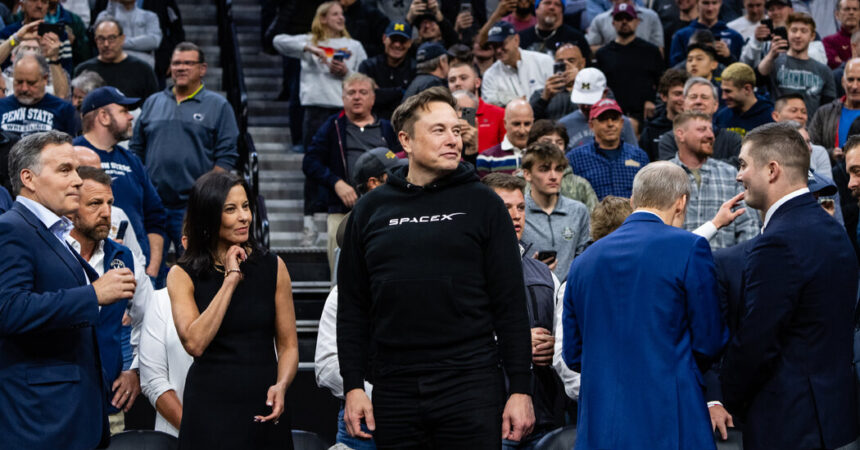
SpaceX, founded by Elon Musk, made headlines with its monumental initial public offering (I.P.O.) as it debuted on the stock market, marking the largest offering in history. The shares started at $150 on the first day of trading, rising from the I.P.O. price of $135, and closed at $161.11, giving the company a staggering valuation exceeding $2 trillion. This remarkable increase not only secured SpaceX’s place as a significant player in the market but also propelled Musk into the history books as the world’s first trillionaire. His newfound wealth and status further amplify his influence in various tech sectors.
During the I.P.O., SpaceX raised $75 billion, outpacing the total amount acquired by all other U.S. I.P.O.s over the last two years combined, according to industry analysts. This achievement eclipsed the previous record set by Saudi Aramco, which was valued at $1.7 trillion when it went public in 2019. The I.P.O. generated substantial wealth not only for Musk but also for many of his close associates in venture capital, private investment firms, and thousands of SpaceX employees, who instantly became millionaires.
Musk celebrated the event at SpaceX’s headquarters in Starbase, Texas, surrounded by employees, family, and friends. Reflecting on the company’s journey since its inception in 2002, Musk expressed disbelief over its transformation from a small startup in a Southern California warehouse to a major player in the aerospace industry.
Analysts foresee that SpaceX’s groundbreaking I.P.O. may pave the way for future public offerings from artificial intelligence startups like OpenAI and Anthropic, both of which are on the brink of achieving similar immense valuations. This potential influx of trillion-dollar entities into the market could signal a seismic shift in corporate power dynamics, placing these tech innovators alongside established giants like Google and Amazon.
The I.P.O. process itself was accelerated, lasting only six months from Musk’s initial announcement, a testament to the company’s resolve and strategic planning. SpaceX’s unique structure allowed Musk to maintain tight control, owning approximately 85 percent of shareholder votes prior to the I.P.O., enabling him to guide the company through its growth stages.
As Stock prices are expected to experience volatility in the initial weeks following listing, demand for the limited shares available could drive prices higher. Initial investor enthusiasm may wane as more shares come to market, and J.P. Morgan analysts noted the average I.P.O. share price initially increases by 32 percent, although there can be significant drops in the following year.
Despite recent losses, claiming a reported $4.9 billion last year, SpaceX’s revenue surged by 33 percent to $18.7 billion, demonstrating its robust growth trajectory. The funds raised from the I.P.O. are earmarked for various ambitious projects, including the establishment of A.I. data centers in orbit, constructing a factory on the Moon, and Musk’s vision of eventually colonizing Mars.
In a celebratory atmosphere on the Nasdaq floor and at the company’s headquarters, an excited public gathered to witness the historic event. Many attendees viewed this moment as an opportunity akin to investing early in transformative companies like General Motors or Microsoft. The enthusiasm of the moment was mirrored in lavish celebrations held by the underwriters involved in the I.P.O., with events featuring space-themed decorations and culinary delights reflecting the company’s ambitious vision.
As SpaceX continues to navigate the complexities of public markets, its unprecedented I.P.O. marks not only a significant achievement for the company but also a potential redefinition of the tech landscape, characterized by rapid advancements in aerospace and artificial intelligence, fostering a new era of corporate innovation and competition.