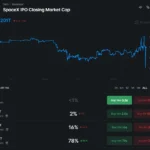
SpaceX’s stock saw a remarkable debut on the Nasdaq, following an initial public offering (IPO) that set records and positioned CEO Elon Musk as the first trillionaire in history. The shares launched at $150, reflecting an 11% increase from the IPO price of $135, and climbed even higher to $169 by the end of the trading day, marking a 25% rise.
The company managed to raise around $75 billion by selling over 555 million shares at the offering price, making this IPO the largest ever recorded. Creating a buzz around the event, Musk celebrated the occasion from SpaceX’s Starbase in Texas, where he stood before a Nasdaq-branded podium alongside executives including President Gwynne Shotwell and Chief Financial Officer Bret Johnsen to ceremonially ring the opening bell in New York.
Musk expressed his astonishment at SpaceX’s achievements, recalling that he believed the company’s chances of success were less than 10% in its early days. He highlighted the importance of having new entrants in the space sector to pave the way for humanity’s future as a space-faring civilization.
In a strategic move coinciding with the IPO, SpaceX successfully launched its 650th Falcon 9 rocket from Florida, delivering several Starlink broadband satellites into orbit. This rocket launch underscored the company’s ongoing commitment to expanding its space operations.
Looking ahead, SpaceX detailed ambitious plans on how it intends to deploy the funds raised. In a filing with the Securities and Exchange Commission, the company outlined its aims to broaden its flagship rocket and satellite communication offerings while also enhancing its focus on artificial intelligence (AI). Earlier this year, SpaceX acquired Musk’s AI startup xAI and has laid out expansive plans for developing data centers on Earth, AI microchips, and what it refers to as “orbital AI compute infrastructure,” essentially space-based data centers.
Despite the optimism surrounding the IPO, SpaceX is not yet profitable. The company reported a net loss of $4.3 billion in the first quarter of the year, raising questions from critics about its inflated market valuation. While the IPO price initially positioned SpaceX around $1.77 trillion, the surge in stock price nudged its market value beyond $2 trillion, making it one of the world’s largest publicly traded companies.
However, analysts have expressed skepticism regarding SpaceX’s valuation. Morningstar analysts noted significant uncertainties surrounding the company’s business model, especially under Musk’s governance, which also involves oversight of Tesla and other ventures. They highlighted various risks, including those related to strategic execution, technological advancements, regulatory factors, and market dynamics.
The SpaceX IPO serves as the first of three significant tests for investor interest in AI-related technology companies this year. OpenAI and Anthropic, both key players in the AI space, have also signaled their intentions to go public, with potential listings anticipated in the fall. While there is considerable interest in these burgeoning AI companies, concerns linger regarding their current profitability as they continue to invest heavily in development and user subsidies.
Industry experts caution that the nascent technology brings with it a wealth of hype and fluctuating valuations, casting uncertainty over which companies will ultimately emerge as commercial successes.