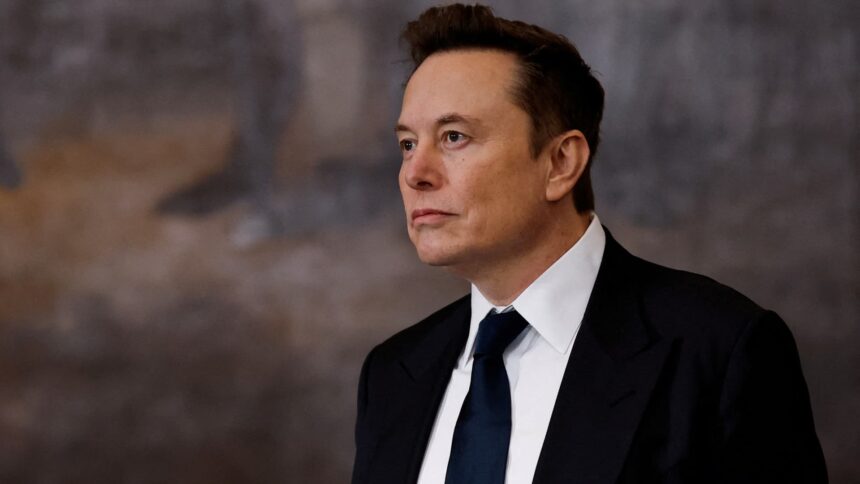
Elon Musk, the CEO of both Tesla and SpaceX, was recently present at the inauguration of U.S. President-elect Donald Trump, marking a notable moment in the intersection of technology and politics. Following the announcement of SpaceX’s intention to go public with what could be a record-breaking IPO, speculation is mounting around the potential merger of SpaceX and Tesla, a scenario some analysts believe could reshape the landscape of the tech industry.
Wedbush analyst Dan Ives has posited that the merger could occur as early as next year, suggesting that the integration of the two companies could enhance their competitive edge in the evolving arena of artificial intelligence. Ives noted that Musk’s ambitions to “own and control more of the AI ecosystem” could be significantly bolstered by such a merger, uniting the capabilities and innovations of both Tesla and SpaceX.
However, market sentiment surrounding the merger remains mixed. According to data from Kalshi traders, there is only a 33% probability that a merger will occur before May 2027, with even lower chances projected for earlier dates. Despite initial optimism and a reported 77% likelihood of a merger before April 2027, projections shifted dramatically, showing a drop of about 40 percentage points the following day.
The timing of a merger may be particularly beneficial for Tesla, especially following reports that the company has lost ground in the Chinese electric vehicle market to competitors such as BYD, Geely, and Chery. In April, Tesla was overtaken by BYD in terms of the number of electric vehicles sold, prompting the need for strategic realignment.
Merger speculation is not a new development. Tesla and SpaceX are already collaborating on the Terafab semiconductor fabrication plant in East Texas, aimed at producing chips for both companies, with project costs estimated to reach up to $119 billion. During a recent earnings call, Musk discussed the complexities involved in this venture, emphasizing that any intercompany arrangements would require the approval of both companies’ boards. He acknowledged the challenges of balancing the interests of shareholders from both organizations during this process.
Walter Isaacson, renowned for his biography of Musk, previously hinted at the possibility of a merger, suggesting that Musk’s management of engineers between his companies signifies a desire to consolidate them into a single entity.
As discussions of a merger continue, investors and industry analysts are closely monitoring developments, weighing the potential implications for both Tesla and SpaceX in the rapidly changing technological landscape.