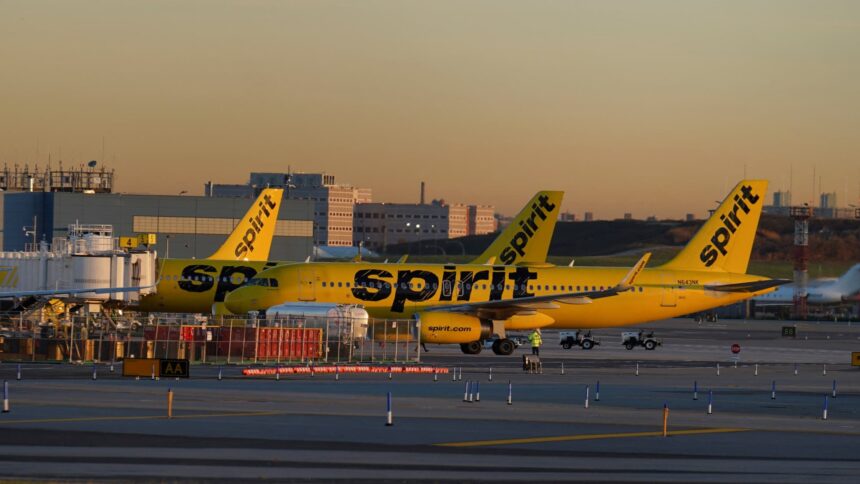
Spirit Airlines is reportedly facing the possibility of liquidation within the week, according to sources familiar with the situation. These individuals, who requested anonymity due to the sensitivity of the information, revealed that the budget carrier’s struggles have intensified following its second bankruptcy in under a year. The airline is now contending with rising fuel prices, which have emerged as a critical challenge given that fuel constitutes a major expense for airlines, second only to labor costs.
In a brief statement, Spirit Airlines refrained from addressing the speculation surrounding its future, stating, “We don’t comment on market rumors and speculation.” However, the timeline for any potential liquidation remains uncertain, with reports suggesting an expedited process could be underway. Bloomberg was one of the first outlets to report on the looming threat of liquidation.
This development arrives as the U.S. airline sector, including Spirit, concludes its typically bustling spring break travel season. In a bid to stabilize the company, pilot and flight attendant unions had previously made concessions to support Spirit’s survival efforts. Management had outlined plans to scale back operations and focus on high-demand travel periods and specific routes to facilitate a more successful exit from bankruptcy.
Historically, Spirit Airlines maintained a strong profitability record, boasting attractive margins within the airline industry. However, the pandemic fundamentally altered the landscape, leading to increased wages, changing customer preferences, and an oversaturation of domestic flights, which in turn drove ticket prices down—a particularly hard hit for airlines like Spirit that primarily cater to budget-conscious travelers and lack the cushion of premium cabin offerings or lucrative frequent flyer programs.
The airline’s challenges were further exacerbated by a recall of Pratt & Whitney engines that grounded several Airbus aircraft starting in 2023. Additionally, an attempted acquisition by JetBlue Airways faced legal obstacles when a federal judge deemed the merger anticompetitive, forcing both airlines to navigate a market increasingly dominated by larger competitors.
In financial documents filed in December 2024, Spirit had forecasted a net profit of $252 million for the previous year. However, by August, the airline reported a loss of nearly $257 million during a period commencing March 13, shortly after exiting its first Chapter 11 bankruptcy, and continuing to the end of June. Just weeks later, the airline found itself filing for Chapter 11 protection again, indicating persistent financial distress.
In an effort to attract higher-spending customers, Spirit had recently introduced more spacious seating arrangements and bundled fare options that included extras such as seat assignments and baggage, hoping to better position itself against larger rivals benefiting from a resurgence in discretionary spending among travelers post-pandemic.