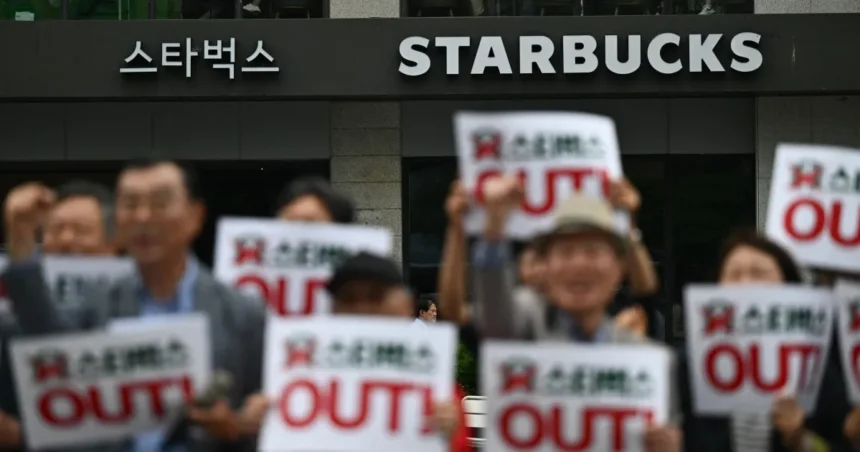
Starbucks stores in South Korea are set to close early next week for a unique purpose: to provide employees with training focused on historical awareness and social sensitivity. This decision comes in the wake of a marketing campaign that sparked significant public outrage due to its insensitivity towards a tragic episode in the country’s history.
Last month, Starbucks Korea faced severe backlash after promoting coffee tumblers with the phrases “Tank Day” and “5/18.” These terms evoke the military crackdown on May 18, 1980, which was a pivotal moment in South Korea’s struggle for democracy, particularly against the backdrop of the Gwangju Uprising. This incident is remembered as one of the darkest periods in the country’s history, where a student-led pro-democracy movement was violently suppressed, resulting in hundreds, if not thousands, of deaths.
The public outcry over the campaign was so intense that it led to the termination of Starbucks Korea’s CEO, Son Jung-hyun. The global headquarters of Starbucks described the incident as “unintentional,” acknowledging the severity of the mistake and emphasizing that it “never should have happened.”
In an effort to address the situation and educate its workforce, Shinsegae Group, the local operator for Starbucks, announced that all stores in the country would close at 3 PM on Monday, allowing employees to participate in the training session. This marks the first time since Starbucks established its presence in South Korea in 1999 that the outlets will close simultaneously across the nation.
Additionally, Chairman Chung Yong-jin and other top executives from Shinsegae Group will receive their own training on the following Wednesday. The company expressed that the initiative is aimed at learning from the incident to prevent future missteps in similar corporate communications.
The Gwangju Uprising not only resulted in immediate loss of life but also played a crucial role in South Korea’s eventual transition towards democracy, culminating in the first free elections in 1987 after years of military rule. While government reports have estimated the death toll during the uprising at over 200, many activists and historians believe that the actual number of victims exceeds 2,000.
As Starbucks operates more than 2,000 stores in South Korea, making it the company’s second-largest market outside of China, the incident underlines the importance of cultural sensitivity and historical consciousness in international business practices. The upcoming training sessions reflect a broader commitment to fostering an informed workforce that respects and acknowledges the historical contexts in which they operate.