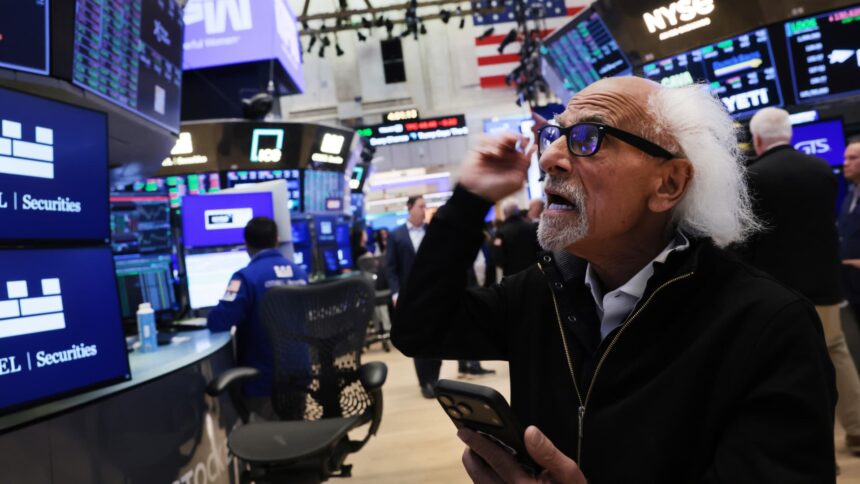
Traders on the floor of the New York Stock Exchange (NYSE) experienced a tense atmosphere as stock futures took a downward turn on Sunday night. This decline came on the heels of reports detailing missile strikes from Iran directed at Israel, raising alarms about the precarious state of a ceasefire agreement between the two nations. The situation heightened market anxieties following a significant selloff in technology stocks seen the previous week.
Futures linked to the Dow Jones Industrial Average saw a decrease of 80 points, translating to a 0.2% drop. Similarly, the S&P 500 and Nasdaq 100 futures also fell by 0.2%. The attacks from Iran shifted investor focus towards geopolitical stability, particularly as Iranian Parliament Speaker MB Ghalibaf asserted on social media that the U.S. naval blockade and perceived breaches in agreements related to Lebanon were violations of the ceasefire.
Last Friday marked a challenging end to the trading week for the Nasdaq Composite, which plummeted by 4.18%, closing at 25,709.43. This represented the index’s most significant decline since April 2025. The S&P 500 fell 2.64%, finishing at 7,383.74, while the Dow tumbled by 695 points to settle at 50,866.78, just a day after reaching a new all-time high. Over the course of the week, the S&P 500 saw a dip of more than 2%, the Nasdaq experienced a 4.7% drop, and the Dow posted a slight decrease.
This downturn closely followed the release of a stronger-than-anticipated jobs report for May, which in turn led to an uptick in Treasury yields. Investors began to express concerns that sustained higher financing costs might hinder companies heavily invested in artificial intelligence expansion.
“The stock market may be becoming a victim of its own success,” remarked Callie Cox, chief market strategist at Ritholtz Wealth Management. She noted that while the job market shows signs of recovery, the looming threat of persistently high inflation remains a central concern. “Growth and momentum have outpaced almost everything since the March lows,” Cox added, emphasizing the vulnerability of prevailing market strategies in the face of ongoing cost pressures.
Looking ahead, investors are expected to keep a close eye on impending inflation data and the highly anticipated public debut of Elon Musk’s SpaceX, scheduled for Friday. This offering is projected to be one of the largest in Wall Street history and could serve as a critical test of the current market narrative surrounding AI valuations.
Cox pointed out that previous market cycles have seen blockbuster offerings represent peaks in excess, suggesting a prevailing uncertainty about potential market sentiment shifts with such a high-profile IPO on the horizon. Moreover, the upcoming release of the Consumer Price Index and Producer Price Index reports, set for Wednesday and Thursday respectively, is anticipated to further inform the market about ongoing inflationary pressures.