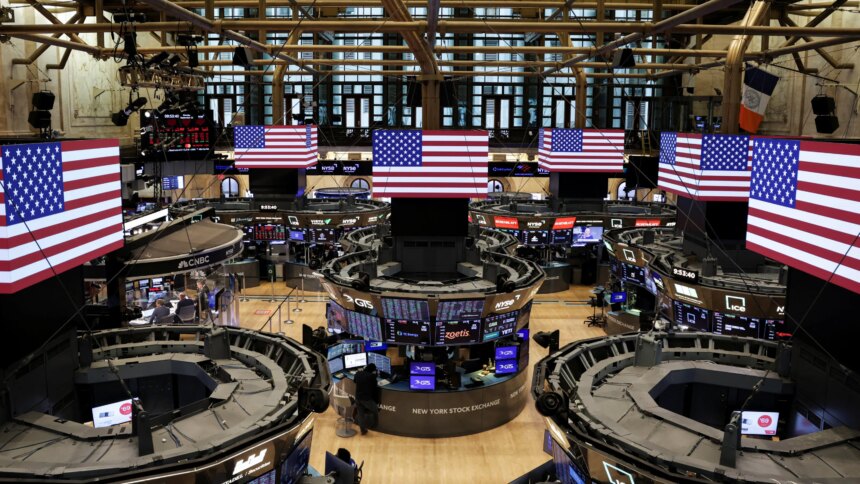
The stock market has been riding high recently, but some analysts express concerns that it may be reaching “bubble” territory. This analogy draws parallels to the overhyped markets of 1999 and 2008, which ultimately experienced drastic declines when the bubbles burst. Conversations have gained momentum surrounding an “AI bubble,” referencing the soaring tech stock prices driven by fervent enthusiasm for artificial intelligence. These anxieties are contributing to a dip in stock prices, especially during the latter part of November, despite several robust earnings reports.
Investor sentiment appears increasingly anxious, leading many to contemplate moving their assets out of the stock market and into cash alternatives such as money market funds, Treasury bills, or conventional savings accounts. This cautious approach to investing often stems from the fluctuating nature of stock prices, which can fuel apprehension.
Certified financial planner Monica Dwyer from West Chester, Ohio, noted an uptick in clients reaching out in distress. For long-term investors, particularly those saving for retirement, withdrawing funds from the stock market is a significant decision that requires careful consideration.
As stock indexes continue to set records, questions arise about whether these prices are excessively high. Economists point to the extreme price-to-earnings ratios as a potential indicator of overvaluation. The cyclically adjusted price-to-earnings ratio (CAPE) for the S&P 500 currently stands at 38.55, a level reminiscent of the peak of the dot-com bubble in 1999-2000 and even the 1929 peak preceding the Great Depression.
The debate over whether the market is in a bubble rages on, depending largely on who you ask. In a September speech, Federal Reserve Chair Jerome Powell cautioned that stock prices are “fairly highly valued,” a sentiment interpreted by many as a signal of overpricing. However, Powell later softened his remarks. Similarly, JPMorgan Chase CEO Jamie Dimon commented in October that numerous assets appear to be entering bubble territory.
Despite pessimism, some commentators argue that many companies are turning profits, supporting the notion that the market has sound fundamentals. AI-driven tech giants, referred to as the “Magnificent Seven,” have been significant contributors to stock market gains over the past decade, boasting a 698% increase from 2015 to 2024, while the S&P 500 saw only a 178% return during the same period. Should an actual bubble exist, analysts contend that the extraordinary gains of these tech stocks played a substantial role in inflating it.
As fears mount, a growing number of investors are transitioning to managing cash. In September, money market funds reportedly held a record $7.7 trillion in assets, reflecting an increasing preference for safer, higher-return investments. Nevertheless, financial experts warn that shifting entirely to cash may not be the best strategy.
Timing the market is inherently risky, as investors must accurately predict both when to sell high and when to buy low—tasks that are notoriously challenging. Peter Lazaroff, a financial planner, emphasized the heightened difficulty of making these decisions, often resulting in missed opportunities for gains.
While having a cash reserve can provide a buffer against market volatility, financial advisors commonly recommend gradually reducing stock exposure as retirement approaches to shield against potential downturns. Zaneilia Harris, another certified financial planner, has been advising clients to enhance their cash reserves as a precaution against market fluctuations.
Younger investors, too, could benefit from maintaining some cash on hand. Dwyer suggests that when the market does take a dip, being prepared with available cash allows for purchasing shares at discounted prices. For those without ready cash reserves, increasing contributions to retirement accounts can also facilitate buying into the market during price declines.
In summary, as the stock market experiences record highs with apprehensions about potential overvaluation, many investors are opting for caution. Whether or not the market is genuinely in bubble territory remains a matter of debate, but the importance of having a strategic approach—balancing investments with cash reserves—continues to resonate among financial planners and their clients.