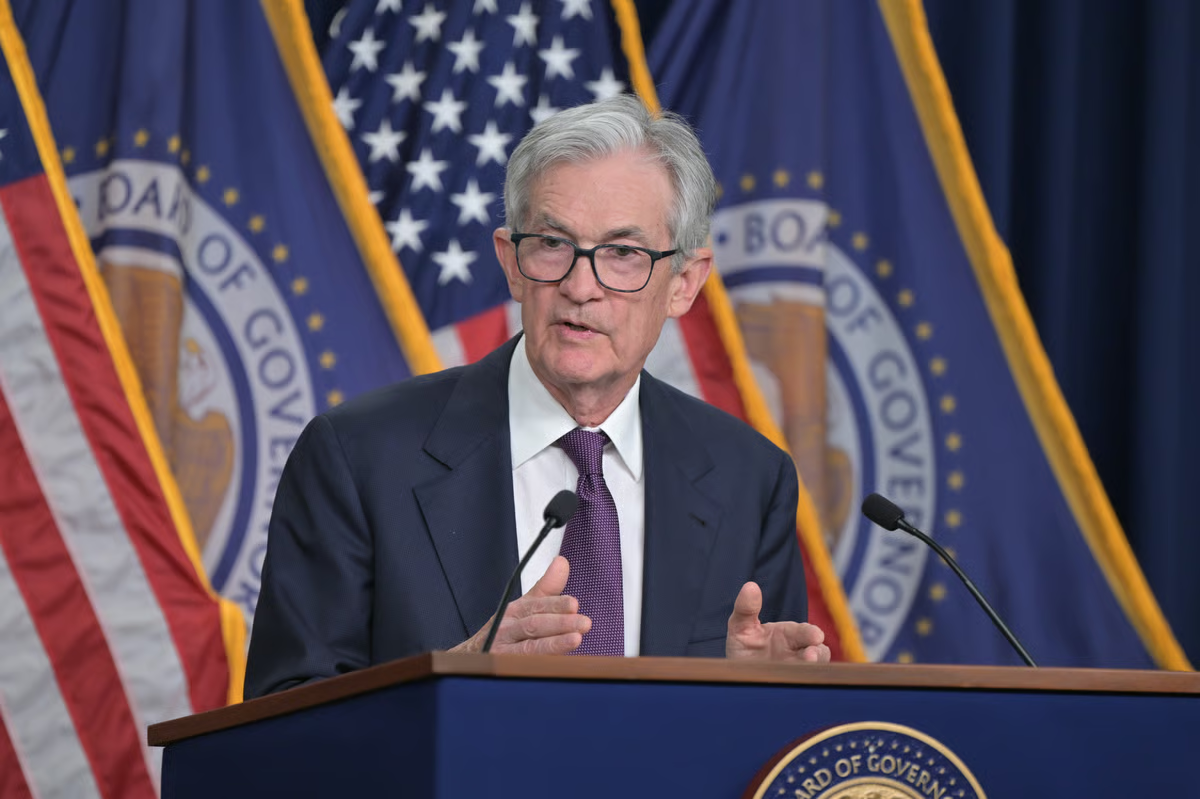
The stock market is currently navigating a multitude of challenges characterized by inflated valuations, a sluggish economy, and deteriorating consumer sentiment. Federal Reserve Chairman Jerome Powell recently raised alarms regarding high equity prices, noting that the S&P 500 was trading at 22.5 times forward earnings in September. This figure has since decreased marginally to 21.5, yet it remains significantly above the 10-year average of 18.7, according to FactSet Research.
Powell’s caution is particularly pertinent given the economic volatility instigated by President Trump’s tariffs. The implementation of a baseline 10% tariff in April has contributed to notable shifts in inflation and employment statistics. For instance, the Consumer Price Index (CPI) recorded an inflation rate of 2.3% in April, which escalated to 3% by September. Projections from the Federal Reserve Bank of Cleveland indicate inflation could remain at this heightened level into November.
Job creation also appears to be on a downward trajectory, with the U.S. economy averaging 123,000 new jobs per month from January to April, a stark contrast to the mere 39,000 average observed from May to September. This five-month period represents the lowest job creation average since 2010, if one excludes the pandemic’s impact. Unemployment rates have similarly worsened, climbing from 4.2% in April to 4.4% in September—the highest level recorded in four years.
Despite Wall Street’s optimistic outlook for the stock market over the next year, the juxtaposition of weak job growth and rising prices has pushed consumer sentiment nearly to its lowest point in history. The University of Michigan’s Consumer Sentiment Index, which gauges consumer perceptions through surveys of around 1,000 households each month, registered a reading of 51 in November—the second lowest since the index began in 1978. The only lower measurement was recorded in June 2022. Throughout 2025, the index’s average stands at 58.7, positioning it to potentially become the worst year on record, primarily due to inflation-induced worries that have already impacted consumer views.
The surge in inflation expectations, which have risen to 4.5% from 3% in September, has further compounded consumer dissatisfaction, as highlighted by Joanne Hsu, director of Surveys of Consumers at the University of Michigan. This ongoing frustration over sustained high prices and stagnant incomes is concerning for the broader economy, as consumer spending makes up two-thirds of GDP. A prevailing atmosphere of pessimism could hinder spending trends, potentially resulting in a downward adjustment of forward earnings estimates by Wall Street analysts.
In terms of numerical forecasts, FactSet Research projects the S&P 500 could experience a considerable increase, with an anticipated target price of 7,928 within 12 months, implying a potential 20% upside from its current level of approximately 6,603. However, this optimistic forecast must be tempered by the awareness that the S&P 500 has already fallen over 4% from its record peak as investor concerns regarding economic hurdles and inflated valuations grow.
Despite these challenges, the prospect of a market correction does not appear imminent, as valuation metrics have historically shown poor predictive power for short-term fluctuations. Renowned economist John Maynard Keynes articulated this notion, suggesting that markets can remain irrational far longer than investors can remain solvent. Nonetheless, the landscape has shifted, with the American Association of Individual Investors reporting a decline in bullish sentiment from 45.9% to 32.6% among surveyed participants expecting stock increases over the next six months.
As the repercussions of tariffs potentially lead to lowered forward earnings estimates, the sustainability of the current bull market remains uncertain. While investors may wish for an upward trend, they must also be prepared for a potentially less favorable scenario, making it prudent to shift focus slightly towards accumulating cash reserves during this turbulent period.