Stock markets are showing signs of recovery as optimism around a potential peace deal in the Middle East grows. This sentiment has helped U.S. equities bounce back, with the S&P 500 index erasing losses incurred since the onset of the Iran conflict in late February. The resurgence has pushed the U.S. stock market close to reaching record highs.
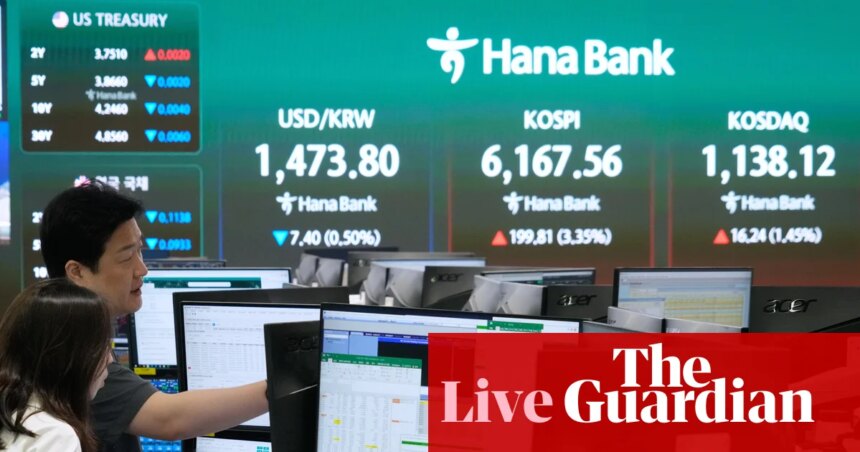
In Asia, markets are reflecting this upward trend, particularly vulnerable to fluctuations caused by energy supply disruptions. The MSCI index tracking Asia-Pacific shares, excluding Japan, jumped 1.5% today, marking its highest value in six weeks. Similarly, Japan’s Nikkei index is on the verge of fully recovering its losses, while China’s CSI 300 index hit a six-week high, reaching levels last seen in March.
The recovery momentum follows a turbulent March and is fueled by hopes that the ongoing ceasefire could lead to fruitful negotiations between Washington and Tehran. Market analyst Tony Sycamore from IG described the recent developments as contributing to “a spectacular market rally.” Notably, the Nasdaq has entered a ten-day winning streak, its longest since late 2021, while the S&P 500 has closed more than 10% above its March low.
While tensions in the Strait of Hormuz linger, market behavior is typically forward-looking. Investors are reportedly factoring in a resolution to this geopolitical crisis rather than getting bogged down by current conflicts. For instance, there are indications that Iran may be willing to freeze uranium enrichment for five years, while the U.S. suggests a minimum of twenty years. A compromise around the ten-year mark appears plausible.
Further supporting market optimism, former President Donald Trump mentioned that U.S.-Iranian peace talks could resume in Islamabad soon, applauding the role of Pakistan’s army chief as a mediator. Nevertheless, conditions in the Strait of Hormuz remain precarious, with U.S. blockades on Iranian ports affecting maritime traffic. In tandem, the U.S. dollar has dipped to six-week lows, undoing much of its gains from before the conflict.
In the UK, the FTSE 100 index opened slightly higher, increasing by 28 points or 0.27%. However, this level still represents a decline of about 2.5% or 274 points from its pre-war closing. Major British housebuilder Barratt Redrow has announced a reduction in land acquisitions, citing rising mortgage rates as a direct consequence of the war, which is driving construction costs upward. They plan to invest between £700 million and £800 million in new land purchases, down from earlier estimates.
U.S. financial markets’ swift recovery has not gone unnoticed, with Deutsche Bank’s market strategist Jim Reid commenting on the rapid pace following the turmoil instigated by the Iran situation. He noted that recent developments have kept oil prices stable, with Brent crude trading at $95.26 per barrel.
Despite the ongoing conflicts affecting forecasts, U.S. Treasury Secretary Scott Bessent has maintained a positive outlook on the economy, suggesting growth could exceed 3% this year. This optimism stands in contrast to the International Monetary Fund’s recent downgrading of global growth projections due to the war’s implications.
Bessent is set to meet UK Chancellor Rachel Reeves at the spring meeting of the International Monetary Fund and World Bank, where discussions around the impact of the Iran war will be high on the agenda. Reeves expressed her frustration regarding the consequences of U.S. actions in the Middle East and their economic fallout on UK families and businesses.
The day’s economic schedule includes various key events, such as the release of U.S. weekly mortgage application data and the New York Empire State Manufacturing Index, among others.