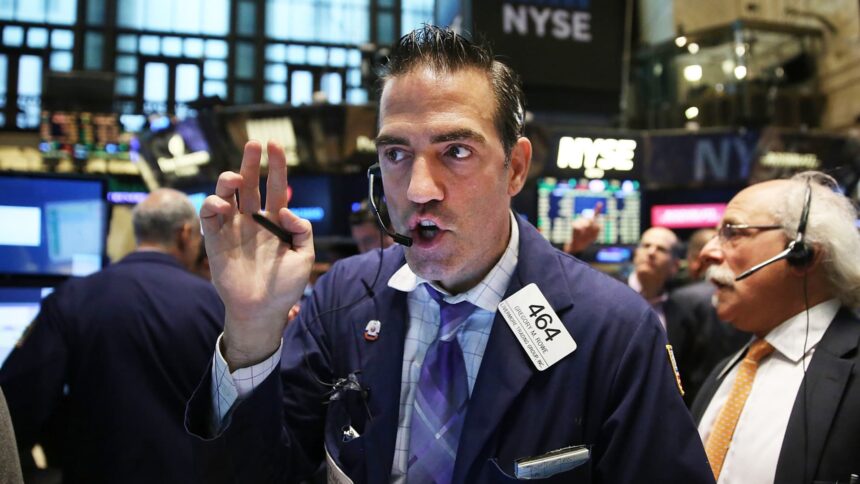
The stock market experienced a mixed performance as 2026 kicked off on Friday, following a week characterized by lackluster trading. The Dow Jones Industrial Average edged down by 0.1%, while the Nasdaq Composite fell by 1.5%. The S&P 500 also shared in the downturn, closing approximately 1% lower, marking its third consecutive loss since the start of the week.
Despite the decline, investor sentiment remained somewhat perplexed as the week did not bring significant economic news. The Federal Reserve’s minutes from its December policy meeting were released, revealing a divided opinion among members regarding a recent 25-basis-point rate cut, approved by a narrow 9-3 vote—the most considerable dissent since 2019. Nevertheless, market reactions to these minutes were tepid, and stocks continued to slide.
This recent lack of momentum sharply contrasts with the impressive performance recorded throughout 2025. During the previous year, the S&P 500 soared over 16%, with both the tech-oriented Nasdaq Composite and the Dow Jones gaining 20% and 13%, respectively. However, investors periodically reevaluated stocks amid concerns about the Federal Reserve’s future rate decisions and the impact of former President Donald Trump’s trade policies. Notably, there were points in 2025 when investors rotated out of technology stocks and into other sectors, reflecting worries over inflated valuations in tech, particularly around the AI sector.
In terms of specific stocks within the Club’s portfolio, notable winners and losers emerged. GE Vernova, Corning, and Alphabet significantly outperformed the S&P 500, showcasing exceptional gains. In contrast, Salesforce, Nike, and Procter & Gamble struggled during the same period.
GE Vernova surged by an impressive 98.7%, largely attributed to its role in the burgeoning AI sector. The company manufactures heavy-duty natural gas turbines—critical components for the data center expansion—which helped bolster its quarterly earnings in 2025. Positive guidance extending through fiscal 2028 also fueled investor confidence.
Corning, with an 84.3% increase, benefited from a robust consumer electronics market. Its partnership with Apple and its capabilities in specialty glass used for data centers further enhanced its standing, solidifying investor interest since the portfolio initiated a position in October.
Alphabet, which gained 65.3%, regained favor after a previous exit from the portfolio. Investor sentiment shifted positively due to the company’s diversified AI strategy and developments surrounding its Gemini project, which includes advanced large language models and custom chips produced in collaboration with Broadcom.
On the flip side, Salesforce experienced a decline of 20.8%. The rise of AI adoption raised concerns about SaaS business models, putting pressure on its traditional customer base as automation gains traction. Nike fell by 15.8%, influenced by declining sales in its crucial China market and broader challenges in the retail sector. Meanwhile, Procter & Gamble slipped 14.5%, hindered by macroeconomic uncertainties, including fluctuating tariffs and the effects of a prolonged government shutdown on consumer sentiment.
As the year progresses, shifts in spending behavior are anticipated, particularly among consumers wary of discretionary spending. While challenges persist for several stocks, particularly those in the discretionary sector, Procter & Gamble’s portfolio of essential consumer goods positions it to weather potential downturns in consumer spending.
The ongoing developments in these markets indicate that while optimism remained high at the end of 2025, the first week of 2026 has prompted reconsiderations among investors as they navigate a new year filled with economic uncertainties.