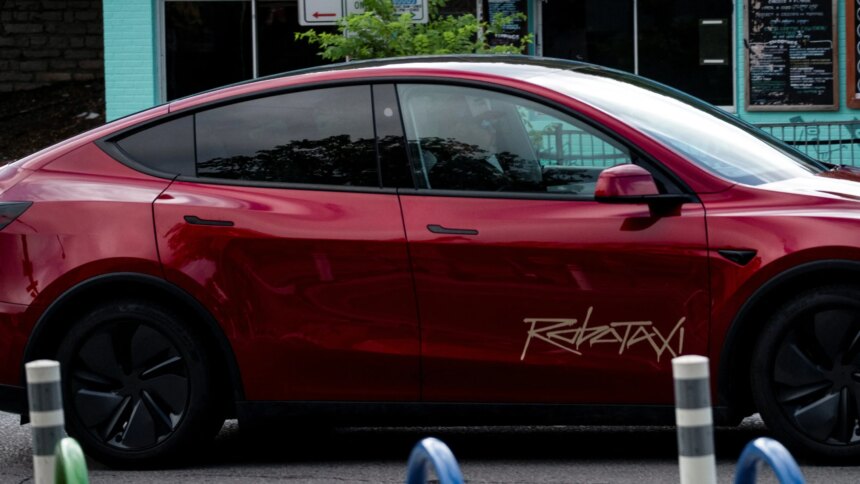
Tesla’s Chief Executive, Elon Musk, made a significant announcement on Tuesday regarding the company’s robotaxi fleet in Austin, Texas. Musk revealed that the number of robotaxis operating in the city is set to double in December, following the launch of Tesla’s self-driving service earlier this June. While specific numbers of current robotaxis were not disclosed, the expansion signals a considerable commitment to enhancing Tesla’s autonomous ride-hailing capabilities.
In a post on X, which Musk also owns, he stated, “The Tesla Robotaxi fleet in Austin should roughly double next month.” This move is part of a broader strategy as Tesla continues to develop and refine its self-driving technology.
Currently, the robotaxi service operates in Austin and the San Francisco Bay Area, where vehicles still require safety monitors to ensure passenger safety during rides. However, recent developments also showcase Tesla’s progress; last week, the company received a permit to begin a ride-hailing service in Arizona, further extending its reach in the autonomous ride-sharing market.
In earlier comments made in October, Musk expressed optimism that robotaxis would be operating without safety drivers in large parts of Austin within the year. He also projected that by the end of 2023, robotaxis might serve eight to ten metropolitan areas, with an expectation to cover approximately half of the U.S. population by the year’s conclusion.
The robotaxi industry appears to be on an upswing after facing years of setbacks characterized by high operational costs, stringent regulations, and regulatory scrutiny. Major players, including Tesla, Alphabet’s Waymo, and Amazon’s Zoox, are accelerating their expansion efforts to capture a share of the emerging market for autonomous ride-hailing services.