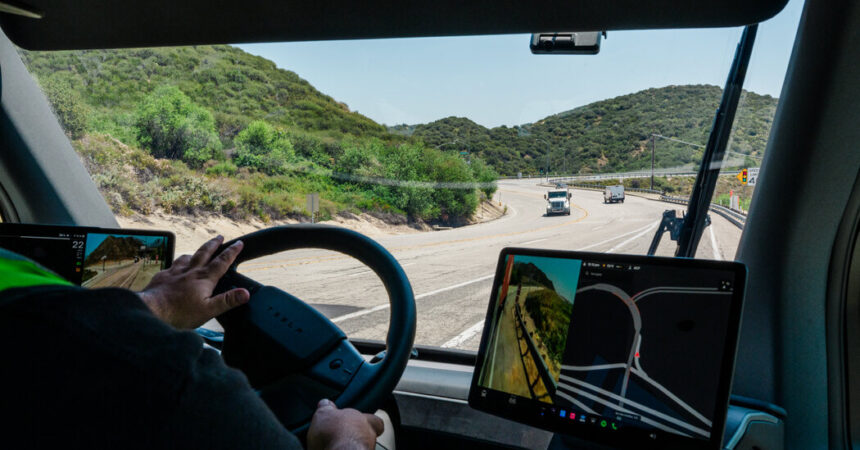
Tesla, known for revolutionizing the automotive industry, is poised to make significant strides in the truck manufacturing sector with its newly launched Tesla Semi. After years of delays since the debut of the Model Y in 2020, initial reviews suggest the Semi may serve as a much-needed success for the company.
The Tesla Semi is entering the market at a competitive price point, expected to sell for around $290,000 for the 500-mile version. This pricing is considerably lower than similar heavy-duty electric trucks offered by competitors such as Daimler and Volvo, which typically exceed $400,000. A more economical model capable of traveling 350 miles on a single charge is also in the works, and both variants promise a longer range than their competitors’ offerings.
Logistics companies have historically hesitated to invest in electric trucks, largely due to high costs and limited range. “The problem with the technology that’s out there right now is their range is limited. They’re quite heavy, and they’re very expensive,” said Jennie Abarca, owner of King Fio Trucking, who has placed an order for 20 Semis. She emphasized that this new entry addresses their previous concerns about capability and cost.
Early interest in the Semi appears robust, as trucking firms in California recently requested state subsidies to purchase over 1,200 of the trucks—a figure surpassing all applications for other electric models since the inception of the state’s incentive program in 2019.
Ivan Torres, a driver for Nevoya, shared his positive experience driving the Semi last month, praising its power and comfort. He noted that the truck’s quiet operation allowed him to run the air-conditioning while waiting for deliveries—something often restricted for diesel trucks due to idling regulations aimed at reducing pollution.
From an environmental standpoint, if Tesla successfully converts the trucking sector to battery power, it could have substantial positive implications. Heavy and medium-duty diesel trucks, while making up a small percentage of total vehicles in the U.S., are responsible for approximately 45 percent of nitrogen oxide emissions from road vehicles, which contribute to serious health issues such as asthma and bronchitis.
The timing of Tesla’s Semi launch is fortuitous, given the recent surge in diesel prices, which have climbed nearly 50 percent since the onset of geopolitical tensions. Electric trucks provide a more cost-effective operational model, even in pricier regions like California.
Currently, Tesla has produced the Semi in limited quantities, primarily for major customers like Pepsi and Nevoya. However, the launching of an assembly line in Sparks, Nevada, indicates plans for increased production, with aims to manufacture up to 50,000 trucks annually. Successful production at this scale could lead to substantial revenue, although experts suggest it may not rival the potential earnings from upcoming technologies like self-driving taxis and humanoid robots that CEO Elon Musk anticipates.
In the context of existing electric truck sales, many remain concentrated in states that offer attractive purchase incentives. Ms. Abarca’s trucking company focuses on container hauling across the Southwest and notes Tesla’s plans to install powerful chargers, facilitating longer journeys and strategic breaks for drivers.
While Tesla’s introduction of the Semi may threaten traditional truck manufacturers, some industry leaders downplay the disruption potential. Volvo’s president, Peter Voorhoeve, expressed confidence in their longstanding reliability and service network, while Daimler’s John O’Leary pointed out challenges with infrastructure for long hauls.
Despite the skepticism from established manufacturers, many in the trucking sector have taken notice of Tesla’s efforts, citing their engagement with potential customers and commitment to establishing necessary charging infrastructure across key regions. Mr. Torres noted a minor issue with charging at one stop, but praised Tesla’s quick response to resolve the problem.
The Tesla Semi represents a significant development not just for Tesla, but also for the broader trucking industry, which may soon find its traditional ways challenged by this innovative electric alternative.