In an era increasingly dominated by artificial intelligence, the importance of strong communication skills has surged to new heights in the business world. Companies, particularly those at the forefront of technology and AI, are investing heavily in talent that can adeptly manage communications. Million-dollar salaries are now a common offer for professionals who can lead these critical efforts effectively.
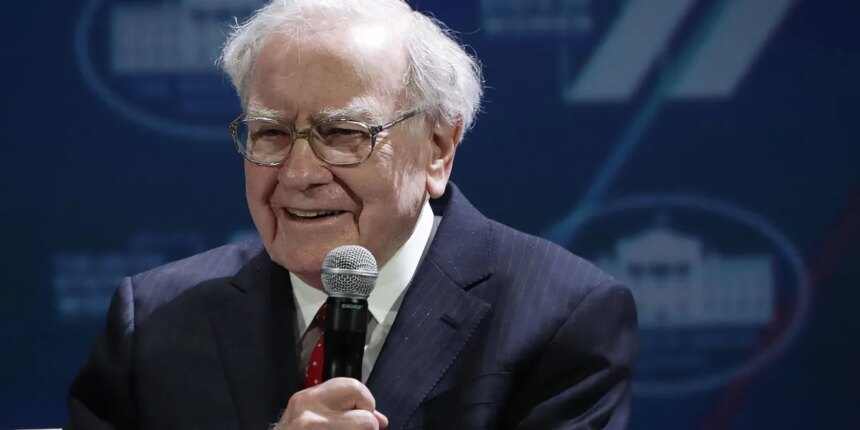
Warren Buffett, a revered figure in investing, has long advocated for the necessity of communication skills in achieving success. During a 2013 interview with Levo League, a career platform aimed at young women, Buffett emphasized, “You’ve got to be able to communicate in life, and it’s enormously important.” He criticized educational institutions for not placing enough emphasis on developing these essential skills.
Buffett’s commitment to mastering public speaking began early in his professional journey. At the age of 20, he tackled his fear by enrolling in a Dale Carnegie course that remains popular today. Reflecting on his initial experience, Buffett noted that participants were often “terrified of getting up and saying our names.” However, his dedication paid off; over his extensive career at Berkshire Hathaway, he emerged as a powerful communicator whose insights could sway financial markets.
“If you can’t communicate and talk to other people and get across your ideas, you’re giving up your potential,” Buffett warned, a statement that resonates strongly today, especially among new graduates. A recent survey by the National Association of Colleges and Employers indicates that both verbal and written communication skills are top priorities for employers seeking recent college graduates.
As Buffett prepares for his retirement in 2025, he reiterated in his final shareholder letter that learning is a lifelong endeavor. “It is never too late to improve,” he advised, encouraging individuals to identify role models to emulate.
The significance of communication is echoed by other business leaders. Jeff Bezos, the founder of Amazon, has championed strong communication as a cornerstone of the company’s distinctive six-page memo culture. During a 2012 interview when he was named Businessperson of the Year by Fortune, Bezos described how team meetings involve reading these meticulously crafted memos together. He noted that new employees often struggle to adapt to this practice, stating, “They’re just not accustomed to sitting silently in a room and doing study hall with a bunch of executives.”
Writing a memo, as Bezos pointed out, is a complex task. “Full sentences are harder to write,” he emphasized, highlighting the clarity of thought required to craft structured narratives.
Jamie Dimon, CEO of JPMorgan Chase, also underscored the essential role of communication skills in today’s job market, especially as Gen Z enters a workforce increasingly shaped by technology. In a December 2025 interview with Fox News, Dimon advised aspiring professionals to develop not only technical competencies but also critical thinking and emotional intelligence. He stated, “My advice to people would be critical thinking, learn skills, learn your EQ [emotional quotient], learn how to be good in a meeting, how to communicate, how to write. You’ll have plenty of jobs.”
As the future unfolds, it is evident that the ability to communicate effectively will remain a vital component of success in an ever-evolving business landscape.