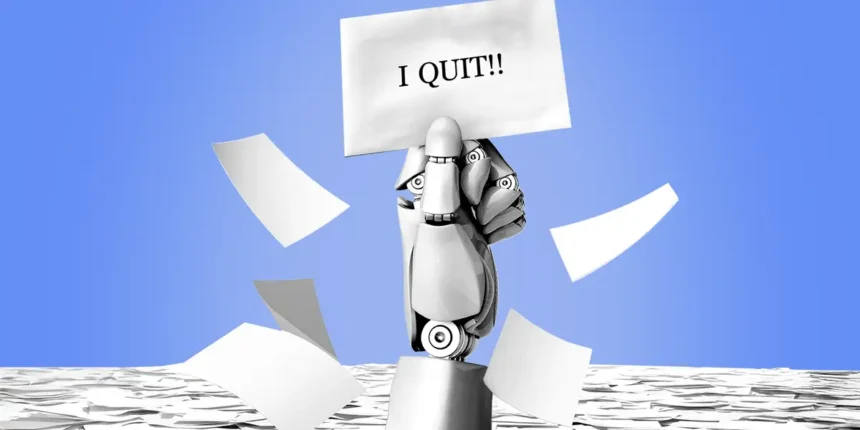
In recent years, corporate resignations, particularly from the field of artificial intelligence (AI), have gained unprecedented visibility, becoming a new genre spurred by the introspective musings of leading researchers. These resignations, many articulated via social media or open letters, provide insights not only into individual discontent but also into broader concerns regarding the direction of the AI industry.
This week saw several additions to the growing collection of resignation missives, including notable letters from researchers at xAI and a thought-provoking op-ed from a departing OpenAI researcher in The New York Times. Perhaps the most striking was penned by Mrinank Sharma, who recently left Anthropic, a company renowned for its commitment to AI safety. In his 778-word letter, Sharma evokes poetry as he touches on his thoughts about AI’s ethical implications and society’s “poly-crisis,” demonstrating a deep emotional connection to his work. He expresses concerns about the responsibilities that come with rapid advancements in AI technologies, stating, “We appear to be approaching a threshold where our wisdom must grow in equal measure to our capacity to affect the world, lest we face the consequences.”
Sharma’s final project at Anthropic sought to understand the impacts of AI assistants on human behavior, highlighting how overreliance on technology could erode essential aspects of humanity. He concludes his letter with a desire to explore poetry, suggesting a retreat from the world of AI he once engaged with so fervently.
The context of these resignations often illustrates a deeper underlying tension within leading AI laboratories. Many of the departing researchers have worked in safety and alignment roles, confronting the dilemma of balancing rapid product development with ethical considerations. These roles are essential for ensuring that AI technologies do not deviate from serving human needs and welfare, yet they often find themselves overshadowed by teams focused on consumer-facing products. This fragmented focus raises concerns about the thoroughness of safety protocols and testing procedures.
High-profile departures from companies like OpenAI, often seen as a benchmark in the AI realm, have been marked by dramatic incidents. The brief dismissal and subsequent reinstatement of CEO Sam Altman in late 2023 punctuated a climate of uncertainty. The organization’s challenges are further amplified by its unsustainable business practices, including a recent shift toward revenue generation through advertising—decisions that have prompted researchers like Zoë Hitzig to voice their disapproval and resign.
Hitzig warned about the dangers of using user interactions for commercial gain, asserting that such moves could undermine the trust users place in AI systems. Her perspective reflects a growing apprehension that the exploitation of AI technology could lead to pervasive manipulation, reminiscent of tactics seen in other large tech platforms.
Moving through the ranks of AI startups, researchers have expressed deep fears regarding the rapid pace of technological growth. Comments from individuals like Dylan Scandinaro and Miles Brundage echo a consensus that while AI holds incredible potential, it concurrently poses existential risks if not handled with due diligence. Resignation letters often serve as cautionary tales interwoven with personal narratives, revealing the emotional toll exacted by corporate decisions amid high-stakes concerns.
The broader implications of AI technologies—spanning data privacy, surveillance, and labor displacement—often go unaddressed in these discussions, which tend to focus on potential future risks rather than present-day applications. As many AI researchers depart, their letters frequently become cryptic warnings or fodder for industry chatter, failing to resonate meaningfully with the larger public understanding of AI’s real-world impacts.
Despite the prevailing uncertainties and conflicts within the industry, few seem willing to abandon AI entirely. Many departing researchers transition to other startups or roles in burgeoning AI think tanks, indicating a complexity of sentiment where talent is still drawn to the potential of AI even as they question its trajectory and reassess their purposes in light of emerging ethical dilemmas. The dual nature of hope and trepidation that colors the letters of these researchers reflects the ongoing struggle to navigate uncharted waters in the ever-evolving AI landscape.