The U.S. stock market experienced a significant decline in March following President Donald Trump’s authorization of military strikes in Iran, but it has since rebounded swiftly. Since April, the S&P 500 and the Nasdaq Composite have achieved remarkable gains of 12% and 18%, respectively. This recovery has been attributed to several companies, particularly in the technology sector, reporting first-quarter earnings that exceeded Wall Street’s expectations. The ongoing boom in artificial intelligence (AI) has particularly driven exceptional performance within this sector.
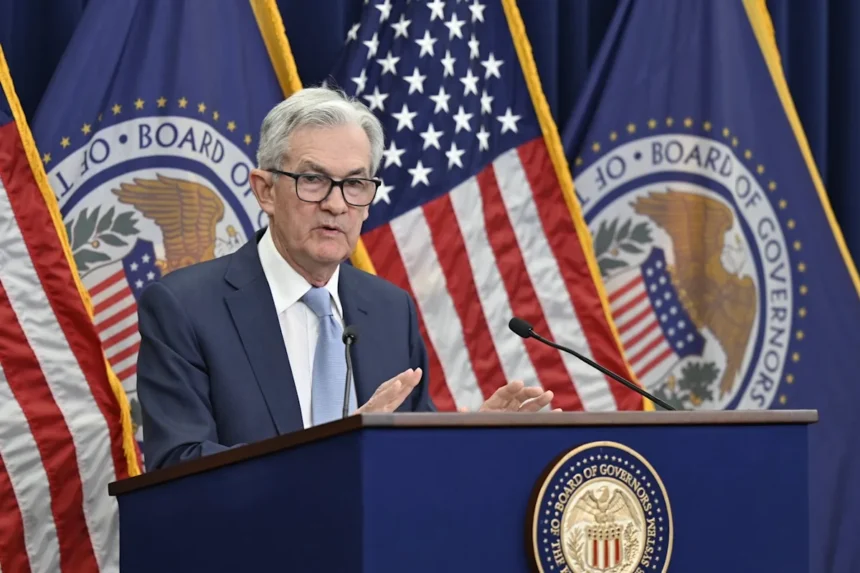
Despite the market’s recovery, concerns linger about its underlying stability. Former Federal Reserve Chairman Jerome Powell issued two crucial warnings during his last months in office, suggesting that investor complacency could lead to significant repercussions. One of his primary concerns pertains to the actions of the Federal Open Market Committee (FOMC).
Earlier in the year, there had been widespread anticipation that the FOMC would reduce its benchmark interest rate by at least half a percentage point, as the job market appeared sluggish and inflation was showing signs of cooling. However, by April, the economic landscape had shifted considerably. Job growth rebounded, and inflation accelerated, partly due to rising oil prices stemming from geopolitical tensions in the Middle East. In response, the FOMC decided to maintain interest rates for the third consecutive meeting, with Powell alerting the market to the heightened uncertainty surrounding the economic outlook.
The price fluctuations in oil represent a significant source of this uncertainty. Rising oil prices affect not only headline inflation but also core inflation—stripping out food and energy costs. An oil shock raises gas and utility prices, creating a ripple effect that increases transportation and manufacturing expenses. Analysts, including Michael Cembalest from JPMorgan Chase, warn that if the Strait of Hormuz isn’t reopened soon, global oil inventories could reach critical lows, escalating prices further and likely intensifying core inflation.
While the Fed may tolerate temporary spikes in headline inflation, a persistent rise in core inflation could necessitate an increase in interest rates—something that, historically, tends to negatively impact stock prices. Since 1999, every cycle of rate increases has typically been followed by a decline in the S&P 500 and Nasdaq Composite within three months.
Furthermore, the current state of the stock market raises alarms about its valuations. Although some valuations have eased slightly, the S&P 500 is still trading at a forward price-to-earnings multiple of 20.1, a premium above the long-term average of 19. High interest rates could further tighten the financial landscape, impacting both consumer spending and corporate profits. As borrowing costs rise, investors may shift their focus away from equities in favor of safer, more stable fixed-income options, complicating the path ahead for stock valuations.
In light of these concerns, potential investors are advised to approach purchasing stocks in the S&P 500 Index with caution. Current recommendations suggest exploring alternative investment opportunities that have been singled out for their potential for stronger returns. Historical data reveals that earlier picks from advisory services have yielded substantial gains, significantly outperforming the broader market.
Considering these factors, investors should be mindful of potential market corrections or even bear trends, particularly in a climate of rising inflation and high valuations. Prudence in investment strategies is advisable as the market adjusts to ongoing economic uncertainties.