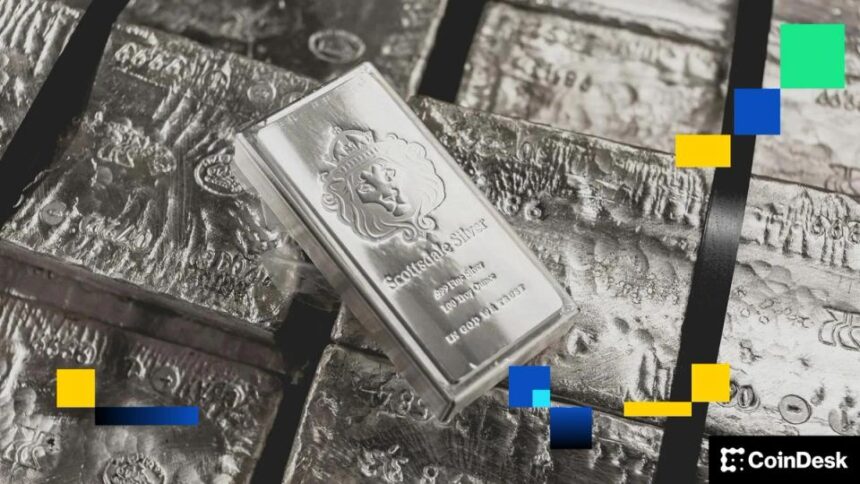
Tokenized silver futures experienced unprecedented liquidations in the crypto market within the last 24 hours, surpassing both bitcoin and ether in an unusual turn of events. This shift is attributed to a pullback in precious metals impacting commodities-based crypto futures. Data from CoinGlass indicates that a staggering 129,117 traders faced liquidation, resulting in total losses reaching approximately $543.9 million.
Leading the wave of liquidations were tokenized silver contracts, with around $142 million wiped out from products that track silver prices. Bitcoin followed closely with losses of about $82 million, while ether faced nearly $139 million in liquidations. The most significant single liquidation order occurred on the platform Hyperliquid, where a leveraged position valued at $18.1 million in XYZ:SILVER-USD was forcibly closed amidst sharp price fluctuations.
This trend marks a significant deviation in the crypto landscape, where bitcoin and ether usually dominate liquidation narratives. Instead, traders utilizing crypto frameworks to express macroeconomic views on metals found themselves bearing the brunt of the liquidations.
The recent pressure on silver prices follows a remarkable rally earlier this month, which turned sharply as hedge funds and large speculators reduced their bullish positions to the lowest level in 23 months as of January 27. Reports indicate a notable 36% decrease in net-long exposure as market participants reassessed their strategies. The acceleration of this pullback coincided with exchanges intervening to address heightened volatility. The CME Group announced it would raise margin requirements for gold and silver futures starting on Monday, with collateral demands for certain silver contracts increasing by as much as 50%.
These higher margin requirements often compel leveraged traders to either inject more capital or exit their positions, which can exacerbate short-term price fluctuations. On Friday, the trading of tokenized metals, which allows for leveraged exposure to gold, silver, and copper without traditional futures accounts, saw significant activity as prices began to decline. These products, which operate around the clock and require less initial capital, have become increasingly appealing, particularly during rapid macroeconomic shifts.
Despite the downturn, bitcoin’s position lower on the liquidation list is notable. Although BTC prices also experienced a drop, the impact was less severe when compared to metal-linked products. Similarly, ether’s liquidation trends reflected a broader risk-off sentiment rather than a dominating sell-off.
This scenario illustrates the growing trend of using crypto platforms as alternative avenues for macro trading. Traders are now leveraging these venues to express views on commodities, interest rates, and currencies through tokenized instruments that mirror traditional markets. The forthcoming movements in metal prices could determine whether the focus on tokenized commodities persists or if the attention returns to crypto’s primary assets.