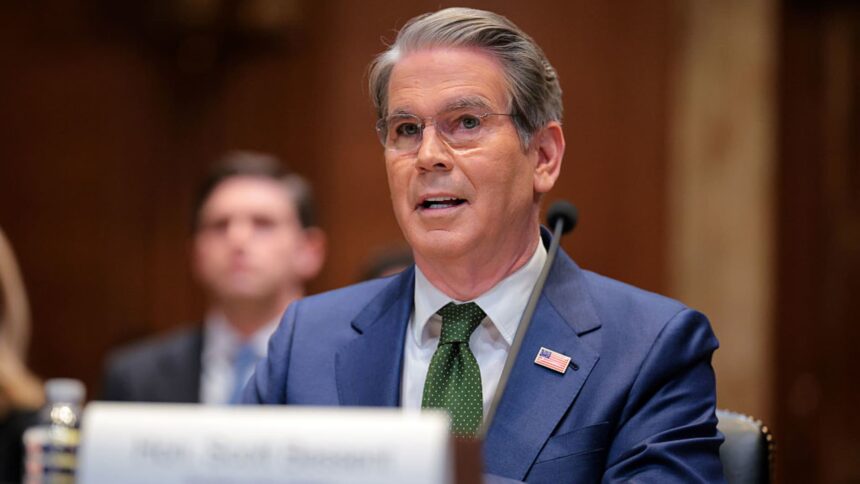
During a recent Senate Appropriations Subcommittee hearing, U.S. Treasury Secretary Scott Bessent revealed that numerous oil-rich allies in the Persian Gulf have sought financial support amidst the economic fallout from the ongoing war with Iran. His remarks come as discussions surrounding potential currency swap lines between the U.S. and the United Arab Emirates (UAE) have gained attention, although official requests have yet to be made.
Bessent emphasized that multiple Gulf nations, not just the UAE, have reached out for swap lines to stabilize dollar funding markets and prevent disruptive sales of U.S. assets. “Many of our Gulf allies have requested swap lines,” he stated, indicating that the mechanism would be beneficial for both the U.S. and its partners. The idea involves providing liquidity in U.S. dollars to ensure that countries reliant on oil revenues could navigate the economic turmoil exacerbated by the conflict.
The war has notably impacted the economies of Gulf nations, with incidents of missile attacks on U.S. allies in the region causing damage to critical infrastructure. Additionally, Iran’s closure of the Strait of Hormuz has significantly hampered oil revenues, crucial for these nations’ economies. A currency swap could play a vital role in maintaining the dominance of the U.S. dollar in oil trading, essential for the regional economy.
President Donald Trump expressed a willingness to assist the UAE during an interview, indicating he would help if feasible. Support for the potential currency swap also emerged from within Congress. Senator Steve Daines, who serves on both the Senate Finance and Foreign Relations Committees, backed Bessent’s approach, suggesting that movement toward a swap is underway.
However, the proposal does not come without potential political ramifications, particularly for Democratic lawmakers. Senator Chris Van Hollen raised concerns about the existing economic strain caused by the conflict, highlighting that the war has already resulted in substantial costs to taxpayers, increased gas prices, and broader economic challenges. He underscored the irony of wealthy nations like the UAE seeking financial support given their high per capita incomes.
The discussion underscores a complex intersection of global economics, domestic political agendas, and the evolving landscape of U.S. foreign relations, particularly concerning wealthy Gulf nations amidst regional instability. As deliberations continue, the implications for both U.S. consumers and international allies remain significant.