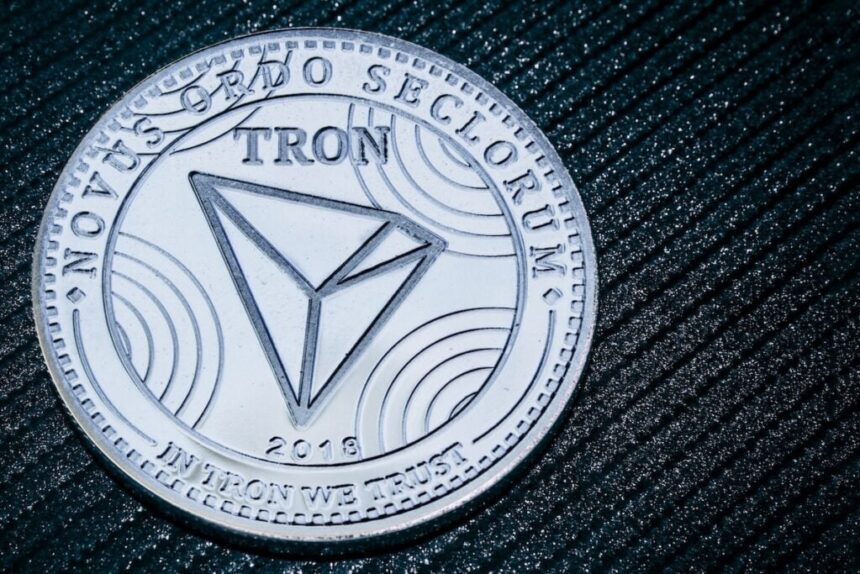
Tron Blockchain has announced a new post-quantum upgrade initiative aimed at bolstering the security of its platform against emerging quantum computing threats. The announcement was made by founder Justin Sun on Tuesday, who stated via an X post that Tron would become the “first major public blockchain” to implement post-quantum cryptographic signatures that have been standardized by the National Institute of Standards and Technology (NIST).
In his remarks, Sun reassured TRON users that the platform is taking proactive steps to safeguard their assets from potential quantum-related vulnerabilities. He hinted that a “technical roadmap” detailing the specifics of this initiative will be unveiled soon, emphasizing that “Quantum security shouldn’t be a debate. It should be a feature.”
The urgency of addressing quantum threats has become a focal point in the cryptocurrency sector, especially following recent research from Google that indicated the possibility of developing quantum computers capable of breaching common cryptographic security measures. The study suggested that a sufficiently advanced quantum computer could potentially decipher a Bitcoin private key in as little as nine minutes, leading to significant security concerns, including the risk of “on-spend” exploits.
Currently, it is estimated that around 6.89 million Bitcoin are susceptible to quantum vulnerabilities, including approximately 3.4 million coins that have remained inactive for more than ten years. While some industry experts remain wary, like Jameson Lopp, chief security officer at Casa, who pointed to a “greater than 50% chance” that powerful quantum computers may not surface for another decade, many leaders in the cryptocurrency space maintain that the situation does not warrant panic.
Brian Armstrong, CEO of Coinbase Global Inc., previously remarked that quantum computing issues are “solvable,” asserting that Coinbase is actively working on strategies to address these impending challenges. Changpeng Zhao, the former CEO of Binance, echoed similar sentiments, stating that the industry has the capability to adapt to post-quantum security requirements.
In his critique of competitors, Sun pointed out that while Bitcoin is entangled in debates about freezing vulnerable coins and Ethereum is forming research committees, Tron is taking definitive action to evolve its security protocols.
This proactive approach by Tron contrasts with the more cautious strategies that other major blockchain networks seem to be adopting, raising questions about how different players in the cryptocurrency ecosystem will address evolving security threats as quantum computing technology advances.
As Tron moves forward with its post-quantum upgrade initiative, the cryptocurrency space will be watching closely to see how it unfolds and whether it proves to be a model for other networks to follow in enhancing security against the potential risks posed by quantum computing.