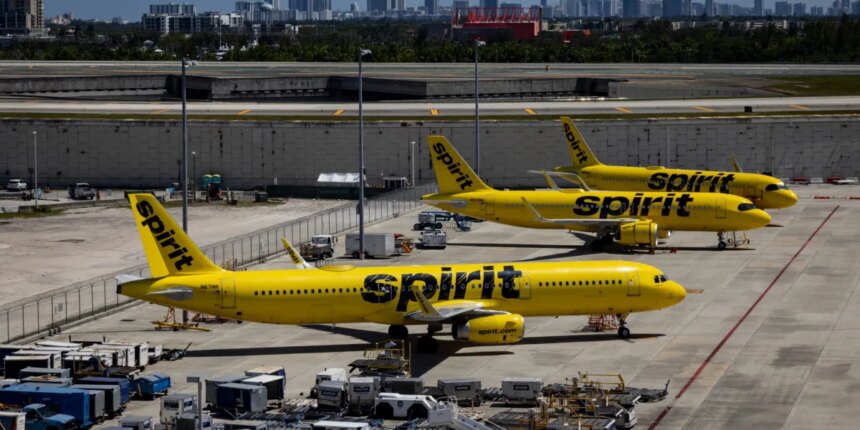
The Trump administration is currently considering the invocation of the Defense Production Act (DPA) to facilitate a possible bailout for Spirit Aviation Holdings Inc., according to a source who requested anonymity due to the private nature of the discussions. The DPA, a law enacted during the Korean War in 1950, grants the U.S. president sweeping emergency powers to direct the production of goods and services considered vital to national defense. This includes the ability to extend loans and make investments.
However, applying this statute to a commercial airline like Spirit could trigger significant legal and political challenges. It remains uncertain what national security rationale the Trump administration could use to justify this bailout, especially as Spirit primarily operates domestic routes as a budget carrier.
Historically, the DPA has been utilized for various purposes, some of which appear to diverge from its original intent. For instance, it has been invoked to accelerate the production of face masks during the Covid-19 pandemic and to address shortages of baby formula. Recently, the Trump administration has also looked to use the statute to support energy production, facilitating offshore oil development and enhancing power-grid infrastructure while promoting coal-fired energy.
“President Trump has openly expressed his interest in helping Spirit Airlines, and the administration continues exploring possible options to ensure the airline remains in operation for its passengers and employees,” said White House spokesman Kush Desai in a statement. He cautioned that any reports concerning the mechanisms or structures of a potential deal between the federal government and Spirit Airlines should be considered speculation unless officially announced by the administration.
CBS News has reported that the DPA is being contemplated as part of the airline’s rescue package. These discussions arise as Spirit navigates a Chapter 11 restructuring, having filed for bankruptcy protection amid escalating losses and significant debt. Despite these challenges, the airline has continued its operations throughout the restructuring process.
Before the onset of the Iran war—which caused a spike in jet fuel prices—Spirit was expected to exit bankruptcy this summer after reaching an agreement with creditors on a plan designed to alleviate billions of dollars in debt and reduce its fleet costs.
Bloomberg previously reported that the administration is crafting a plan that could offer the airline as much as $500 million in financing, potentially in exchange for warrants allowing the U.S. government to purchase up to 90% of Spirit once it successfully emerges from bankruptcy. However, the details of this deal remain tentative and could change or potentially collapse altogether.
During recent comments, Trump indicated that he is exploring the possibility of the U.S. government purchasing Spirit Airlines to help prevent the carrier from experiencing liquidation, heightening the stakes for the airline and its stakeholders.