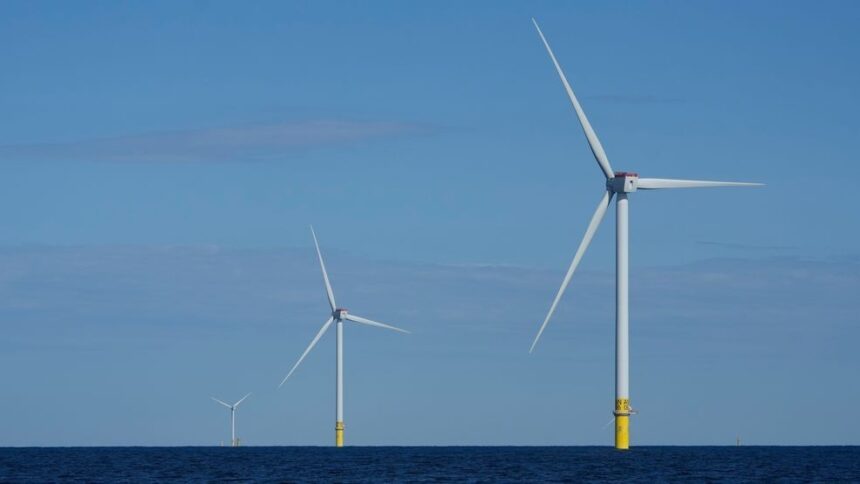
The Trump administration’s recent legal maneuver aims to thwart a significant offshore wind farm project in Massachusetts, illustrating a continued push against renewable energy initiatives touted by environmental advocates. The Bureau of Ocean Energy Management (BOEM) has formally filed a motion in federal court to rescind its approval of the SouthCoast Wind project’s construction and operations plan, which marks the last critical federal permit required before the project can commence installation of turbines.
The SouthCoast Wind project, planned for federal waters approximately 23 miles south of Nantucket, intends to deploy up to 141 turbines capable of powering around 840,000 homes throughout Massachusetts and Rhode Island. This latest action has sparked concerns among critics, who characterize it as part of a broader “all-out assault” on the wind energy industry, particularly by an administration that has long expressed skepticism toward renewable energy sources.
The Interior Department’s decision is aligned with recent trends under the Trump administration, which has culminated in halting construction on major offshore wind projects, revoking previously granted permits, and imposing a temporary freeze on additional wind energy developments. This approach has also included the cessation of approximately $679 million in federal funding earmarked for various offshore wind projects.
In contrast, the Biden administration’s policies have seen the approval of eleven large offshore wind projects aimed at generating enough clean energy to supply over 6 million homes, marking a significant pivot toward fostering renewable energy. The precarious fate of these projects has emerged as the Trump administration’s efforts continue to disrupt the industry, raising fears of creating an unwelcoming environment for future investments in offshore wind.
The legal landscape has shifted recently, with the Interior Department also requesting a Baltimore federal judge to annul a prior BOEM approval for an offshore wind project in Maryland. This project plans to feature up to 114 turbines designed to provide energy to more than 718,000 homes, but construction has yet to begin as impacts of the project undergo renewed assessment.
Despite the uncertainty, developer Ocean Winds has declared an intention to robustly defend its permits in federal court, emphasizing that reliable permitting for infrastructure projects should be a priority for fostering continued investment in the United States.
Critics like Jason Walsh, the executive director of the BlueGreen Alliance—a coalition of labor unions and environmental organizations—express grave concerns that the Trump administration’s actions threaten job stability while waging a “senseless vendetta” against offshore wind energy.
Beyond the SouthCoast Wind project, the Trump administration is also re-evaluating approvals for another Massachusetts-based wind farm—New England Wind—while previously revoking permits for projects like Atlantic Shores in New Jersey. The landscape remains dynamic as both developers and states engage in legal battles in federal courts over paused initiatives, including the Revolution Wind project serving Rhode Island and Connecticut.
Experts express reservations about the long-term implications for U.S. offshore wind development, suggesting that uncertainty may deter potential investors from entering the market. With attractive opportunities available in European and Asian markets, the caution surrounding U.S. projects could catalyze a significant redirect of investments away from American shores.