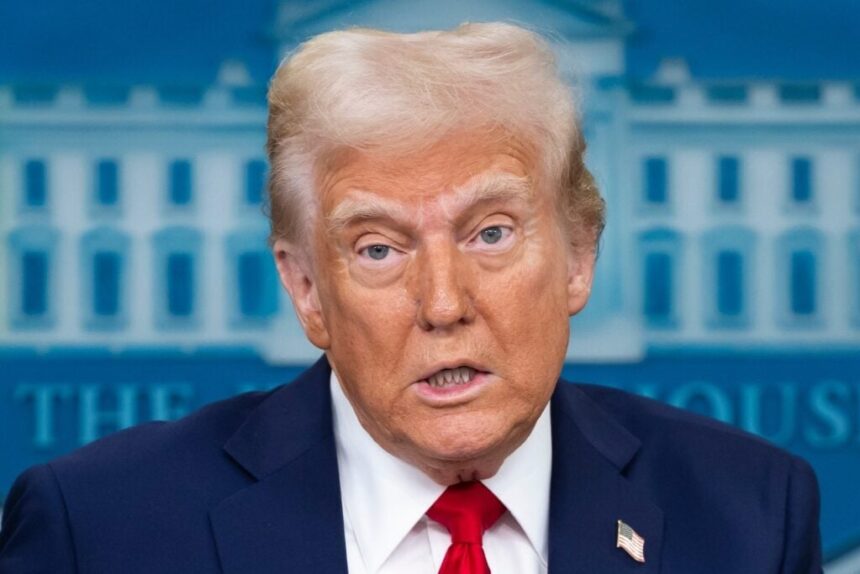
President Trump has made headlines by declaring on Truth Social that he has rescued the American cryptocurrency industry from what he referred to as Gary Gensler’s “Anti-Crypto Army,” asserting that the nation is now the “Crypto Capital of the World.” This bold statement aligns with a series of significant actions he has undertaken since assuming office, which he argues have laid the groundwork for a thriving crypto environment.
In a notable legislative achievement, Trump signed the GENIUS Act in July 2025, which established the first-ever federal framework for stablecoins, ensuring they are fully backed by the dollar and subject to annual audits. This act garnered bipartisan support, passing the Senate with a vote of 68-30, largely due to Trump’s direct engagement with previously hesitant senators.
Earlier in the same year, he issued an executive order that led to the creation of a Strategic Bitcoin Reserve. This initiative repurposed approximately 200,000 Bitcoin seized by the government—valued at around $17 billion—aiming to bolster the U.S. position in the cryptocurrency market. Additionally, Trump has taken steps to further support the industry by appointing pro-crypto officials to key regulatory bodies like the Securities and Exchange Commission (SEC) and the Commodity Futures Trading Commission (CFTC). He is also advocating for the CLARITY Act, currently making its way through Congress.
Trump’s influence appears to have had tangible effects on market performance, particularly evident in 2025 when his announcement regarding the Strategic Reserve catapulted Bitcoin above $90,000 within hours. This surge triggered impressive gains across various altcoins, including XRP, Solana, and Cardano. A similar phenomenon occurred following his election victory in November 2024, which drove Bitcoin prices to a then-record high of $75,999 as investors anticipated more favorable regulatory conditions over the next four years.
However, the broader reality for cryptocurrency holders has been more complex. Although Bitcoin once reached a peak of $126,000, its value has since plummeted to roughly $73,000, marking a decline of about 42%. Factors such as geopolitical tensions, trade wars, and a shift in investor focus toward artificial intelligence and tech stocks have siphoned capital away from cryptocurrencies. Many altcoins have suffered even steeper losses of 70% to 90%, despite a growing base of retail investors.
While Trump’s record on pro-crypto policy demonstrates genuine legislative efforts—including the GENIUS Act and the Strategic Reserve—the translation of these wins into a sustained recovery for the cryptocurrency market remains elusive. Macro-economic factors and geopolitical developments continue to overshadow these policy initiatives.
Furthermore, conflict of interest issues have emerged regarding Trump’s family’s business, World Liberty Financial, which launched its stablecoin, USD1, and is seeking regulatory approval. Critics, particularly from the Democratic side, argue that these developments complicate the very legislation Trump champions.
As the cryptocurrency landscape continues to evolve, investors are advised to consider diversifying their portfolios. Economic cycles tend to shift, and investment strategies that encompass real estate, fixed-income opportunities, and professional financial guidance can help mitigate risks associated with volatility in any single asset class.