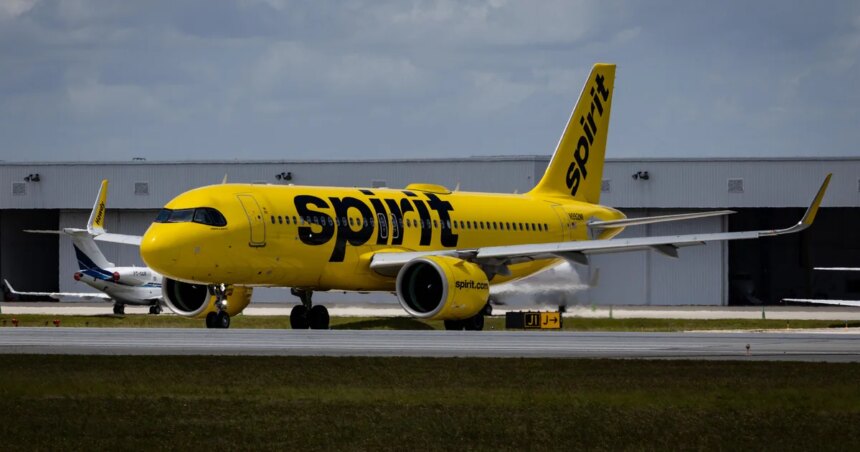
President Trump recently expressed his interest in a taxpayer-funded acquisition of Spirit Airlines, a budget carrier struggling amid rising operational costs. He revealed this plan during an Oval Office event, emphasizing his desire to save jobs and the airline’s future profitability. His comments came after a lawyer representing Spirit informed a U.S. Bankruptcy Court that the airline was in advanced negotiations with the federal government regarding a financial deal intended to help it emerge from Chapter 11 bankruptcy.
Trump noted the value of Spirit’s assets, including its fleet of aircraft and potential airport slots, indicating that he believes the airline could rebound as oil prices decline. “I’d love to be able to save those jobs. I’d love to be able to save an airline,” he stated, highlighting his confidence in Spirit’s ability to stabilize under the right conditions. He added that an appropriate financial package could facilitate a turnaround and involve appointing a competent leader to guide Spirit towards recovery.
Speculation about a government intervention intensified earlier in the week when Trump encouraged potential buyers to consider rescuing the struggling airline. The backdrop to this situation includes a lawsuit from the Biden administration, which attempted to block a $3.8 billion merger between Spirit and JetBlue, citing concerns over rising airfares. A federal judge previously ruled against the merger, complicating Spirit’s situation further.
Following Trump’s remarks, Spirit Airlines President & CEO Dave Davis acknowledged the support from the administration and expressed hope for a solution that would protect jobs and ensure competitive pricing for consumers. Spirit Airlines, based in Fort Lauderdale, Florida, has faced significant losses over the past few years, filing for Chapter 11 protection twice in recent years. The ongoing conflict in Iran has exacerbated operational challenges by driving up fuel costs.
During a recent hearing, attorney Marshall Huebner indicated that government financing could enable Spirit to reorganize effectively, making it more competitive in the market. Talks about a potential federal bailout reportedly included discussions of a loan package potentially worth up to $500 million, which could grant the government a significant ownership stake in the airline.
The possibility of a government bailout, while not unprecedented in the airline sector, raises questions among lawmakers. Some, including Republican Senators Ted Cruz and Tom Cotton, voiced skepticism, arguing that if investors and creditors lack confidence in Spirit’s viability, the government should not intervene. In contrast, the pilots’ union expressed strong support for a potential rescue, highlighting the crucial role Spirit plays in providing affordable air travel for many Americans.
As of late last year, Spirit operated a relatively young fleet of 48 planes while leasing an additional 83, with intentions to downsize its fleet as part of its bankruptcy restructuring efforts. Despite previous buyout proposals from competitors like JetBlue and Frontier failing, the prospect of government involvement remains a focal point in discussions about Spirit’s future. The airline employs about 15,000 people, with a significant number based in Florida, underscoring the job security implications of the ongoing negotiations.