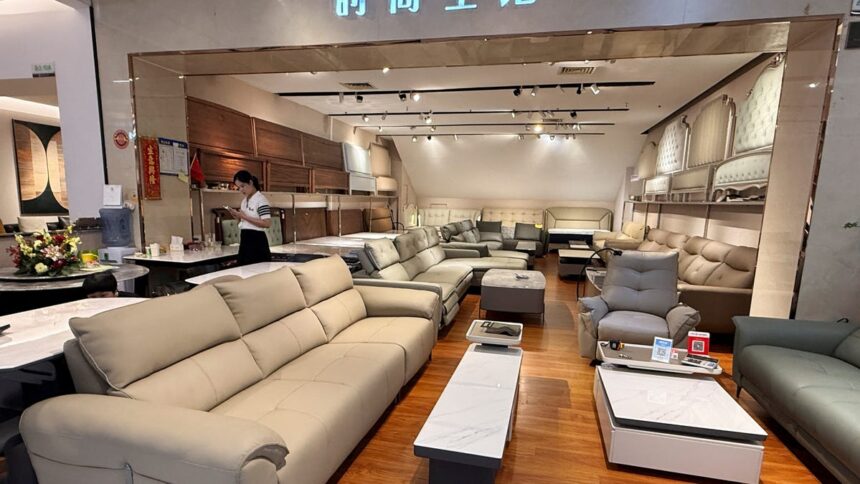
In a significant policy move, President Donald Trump has announced a round of new tariffs set to impact various industries, including pharmaceuticals and furniture. The tariffs, which will take effect on October 1, 2025, include a substantial 50% tariff on kitchen cabinets, bathroom vanities, and related products, along with a 30% tariff on upholstered furniture. Additionally, imports of heavy trucks will be subjected to a 25% tariff, while brand-name drugs will see an unprecedented 100% tariff.
Trump’s statement, shared via Truth Social, emphasized the rationale behind these tariffs as an effort to combat what he described as the “large scale ‘FLOODING’ of these products” into the U.S. from foreign markets. He argued that this practice is unfair and called for protection of the country’s manufacturing sector. “It is for National Security and other reasons,” he stated.
The President’s emphasis on protecting American manufacturing is underscored by a long-standing decline in jobs within the furniture and wood product manufacturing sectors, which have reportedly halved since the year 2000. In 2024, the U.S. imported around $25.5 billion worth of furniture, with Vietnam and China being the principal sources of these imports. Fearful that rising tariffs could lead to increased prices without significantly bolstering domestic manufacturing, some industry executives, such as RH (formerly Restoration Hardware) CEO Gary Friedman, have expressed concerns. Friedman noted that ramping up local production would necessitate substantial investments in manufacturing facilities and labor force development, burdens that many companies may find difficult to shoulder.
The tariffs coincide with legal challenges related to Trump’s previous tariff policies, as a pivotal case regarding his authority to impose such tariffs is set to be heard by the Supreme Court. A lower court previously found that Trump may have overstepped his bounds when invoking a 1977 law to impose import tariffs on various goods. The Supreme Court’s eventual ruling could necessitate the issuance of refunds for the revenues collected from approximately half of the tariffs imposed, should the court find in favor of the challengers.
While tariffs can potentially stimulate domestic demand for U.S. manufacturers, experts caution that they can also disrupt the global supply chain, impacting both consumers and producers alike. Historically, Trump has utilized tariffs as a tool in his foreign policy arsenal, particularly during his second term; however, many previously announced tariffs have since seen reductions or delays.
In light of the looming changes, it remains to be seen how consumers and businesses across the country will react as new tariff policies take shape.