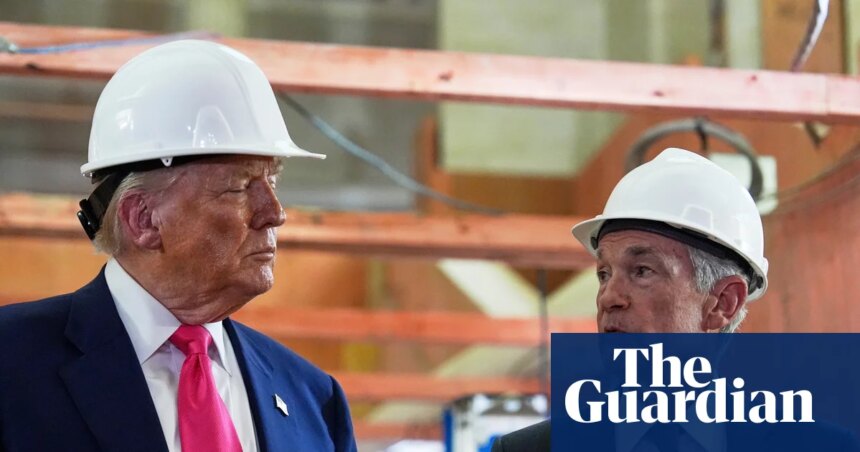
In a recent interview, former President Donald Trump made clear his intentions regarding Federal Reserve Chair Jerome Powell, indicating that he would consider firing him if Powell remains in his position beyond the scheduled end of his term on May 15. As Trump promotes his nominee, Kevin Warsh, to replace Powell, the dynamics within the Senate regarding the nomination have shifted, particularly in light of ongoing scrutiny regarding Trump’s handling of the Federal Reserve.
During the Fox Business interview, Trump stated, “I’ll have to fire him, OK, if he’s not leaving on time,” expressing his longstanding dissatisfaction with Powell’s performance. He criticized Powell for his management of interest rates, arguing that he should be lowering them—a stance Trump has consistently maintained since regaining office in January 2025. This approach stands in stark contrast to the more cautious strategy favored by Powell and his colleagues at the Fed.
The situation is further complicated by Senator Thom Tillis, a Republican from North Carolina and a member of the Senate banking committee, who has vowed to block Trump’s nominee until a criminal investigation into Powell over renovations at the Federal Reserve’s headquarters concludes. Tillis supports Warsh’s nomination but described the ongoing investigation into Powell as “reaching the point of absurd.”
As the deadline for Powell’s term approaches, the political landscape surrounding the Federal Reserve grows increasingly fraught, reflecting the broader tensions between Trump’s administration and traditional economic policy frameworks. The delicate nature of the Fed’s independence is now under scrutiny, especially as the Senate must weigh Powell’s future in conjunction with Warsh’s potential appointment.
In related political developments, indirect talks are reportedly happening between the US and Iran to extend a two-week ceasefire amidst ongoing geopolitical tensions. As various issues unfold, including Trump’s proposals for increased defense spending and a reevaluation of trade agreements with the UK, the landscape of American policy continues to evolve under the watchful eyes of both supporters and critics.
Moreover, the Supreme Court Justice Ketanji Brown Jackson has criticized her conservative colleagues, condemning their use of emergency orders that appear to favor the Trump administration, describing them as “scratch-paper musings” that lack serious consideration.
As this complex interplay of economic and political factors develops, the implications for the Federal Reserve and broader US policy remain significant. Observers are keenly watching how these dynamics will unfold in the coming weeks.