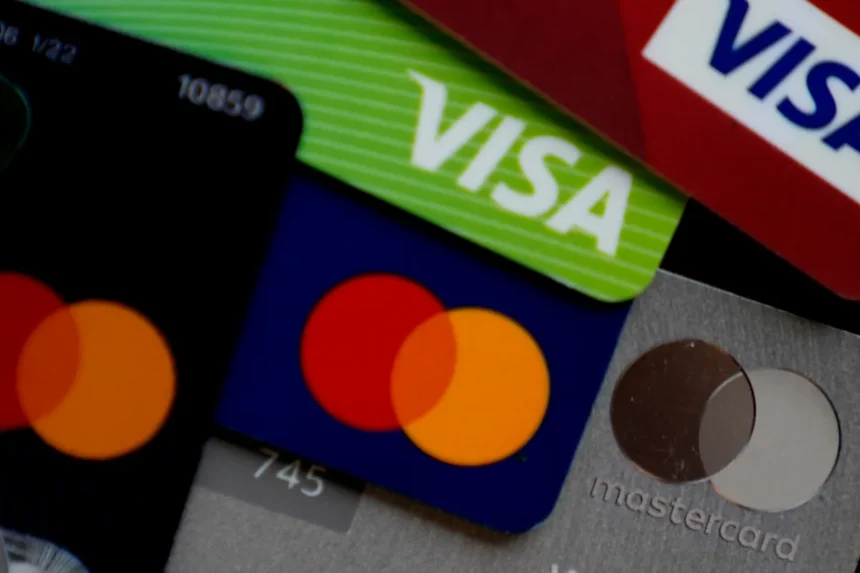
In a surprising development, President Donald Trump has issued a directive to the credit card industry, demanding that interest rates be capped at 10% by January 20. As the deadline approaches, uncertainty looms among consumer advocacy groups, political figures, and banking institutions regarding both the feasibility and implications of this proposal.
White House Press Secretary Karoline Leavitt conveyed that while the president has high expectations for compliance, specifics on potential repercussions for non-compliance have yet to be clarified. “I don’t have a specific consequence to outline for you, but certainly this is an expectation and frankly a demand that the president has made,” she stated. This lack of detail has left many in the financial sector perplexed about the administration’s plans.
Research indicates that if credit card interest rates were limited to 10%, Americans could save approximately $100 billion annually in interest fees. However, such a cap could significantly impact the credit card companies’ profit margins, possibly leading to a reduction in rewards and perks that consumers currently enjoy. The administration has openly shared this research through its official communication channels.
Bank lobbyists have been actively engaging in discussions, seeking clarity on the administration’s stance. Despite bipartisan proposals to cap interest rates introduced in Congress over the years, both House and Senate Republican leaders have been reluctant to support such legislation. Notably, the Dodd-Frank Act, enacted after the 2008 financial crisis, prevents federal regulators from imposing usury limits.
Without a formal law or executive order, it appears that Trump may resort to political pressure to compel the industry to comply, similar to his previous actions with other sectors like pharmaceuticals and technology. In those instances, Trump successfully garnered commitments from corporations to address his demands.
Wall Street is wary of escalating tensions with the White House. The banking industry has thrived under the Trump administration’s deregulation efforts, which have spurred significant tax cuts and a wave of mergers and acquisitions. Representatives from major banks, including JPMorgan and Citigroup, have expressed hesitance regarding the cap, with some officials pledging to fight against it while simultaneously signaling a willingness to collaborate with the administration on affordability issues.
JPMorgan, holding substantial credit card assets and partnerships with major companies, is among those that have voiced strong opposition to the idea of a cap. Chief Financial Officer Jeffrey Barnum indicated that the industry would utilize all available resources to resist the administration’s push.
In contrast, fintech company Bilt has taken proactive steps by launching a new range of credit cards featuring a 10% cap on interest rates for new purchases. While this offer serves as a promotional rate, Bilt’s CEO, Ankur Jain, emphasized a desire to be at the forefront of potential changes in the credit card landscape.
As the deadline approaches, it remains to be seen how the credit card industry and financial regulators will respond to Trump’s demands, and whether his administration will take definitive action in pursuit of these sweeping changes.